
If you’ve noticed ants appearing in your kitchen, bathroom, or basement even after cleaning, you’re not alone. Many homeowners struggle to understand why ants keep coming back in Illinois homes, especially during warmer months and seasonal transitions. Ants are highly organized insects that constantly search for food, water, and safe shelter. Once they find these resources inside your home, they will continue returning unless the source of the problem is properly addressed.
Illinois weather patterns, hidden colonies, and easy access points all contribute to recurring ant activity. Understanding these factors can help homeowners prevent infestations more effectively.
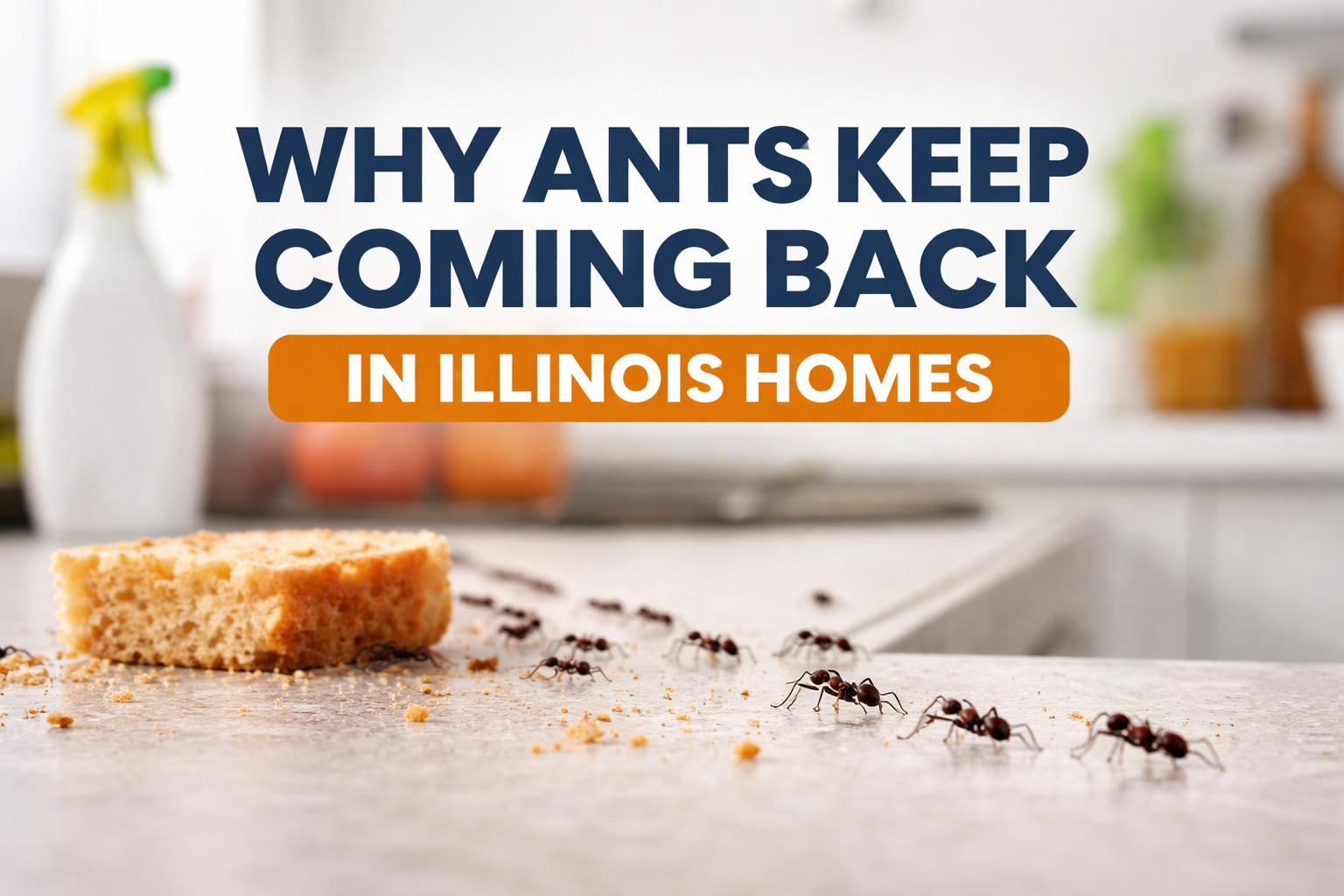
One of the main reasons ants keep returning is because the colony itself remains active. The ants you see indoors are worker ants sent out to search for resources. The queen and the majority of the colony are usually hidden outside in soil, under concrete, near foundations, or inside structural voids.
As long as the queen survives, she continues producing new ants. This means removing visible ants only solves part of the problem. The colony will continue sending new workers into your home.
Long-term prevention often involves identifying nesting areas and using structured treatment approaches similar to those included in professional Pest Control in Plainfield, IL, programs that focus on stopping infestations at their source.
Seasonal weather plays a significant role in ant activity throughout Illinois. During cold winters, ants move indoors seeking warmth and protection. In spring and summer, rising temperatures increase their activity as they search for food and water.
Heavy rainfall can also flood outdoor nests, forcing ants to relocate. Homes provide a stable environment, making them an ideal place for ants to survive and expand their activity.
Preventative treatments and routine inspections, such as those commonly included in ongoing Pest Control in Plainfield, IL, services, help reduce the likelihood of ants entering homes during seasonal changes.
Ants rely on pheromone trails to guide other ants to food sources. When a worker ant discovers food inside your home, it leaves behind a chemical trail that other ants follow. This creates a consistent pathway between the colony and the food source.
Even after cleaning, these invisible trails may remain, allowing ants to return to the same location repeatedly. This is why homeowners often notice ants appearing in the same spots, such as countertops, sinks, or pantry areas.
Addressing both the colony and the pathways is essential for effective control. Prevention strategies similar to those used in Pest Control in Plainfield services focus on disrupting these patterns and preventing reinfestation.
Ants are constantly searching for reliable food and water sources. Even small crumbs, sugary spills, or moisture from leaking pipes can attract ants quickly. Kitchens, bathrooms, and basements are common areas where ants find what they need to survive.
Once ants identify your home as a dependable resource, they continue sending worker ants inside. Over time, this leads to recurring infestations.
Maintaining cleanliness and fixing moisture issues can help reduce attraction, but eliminating nearby colonies is essential for long-term protection.
Ants can enter homes through extremely small openings. Cracks in foundations, gaps around doors and windows, and openings around utility lines all provide access points.
These entry points often go unnoticed, allowing ants to enter freely. Once ants establish a path, they continue using it regularly.
Sealing entry points and maintaining preventative measures helps reduce the chances of ants returning.
Why ants keep coming back in Illinois homes is directly connected to colony survival, environmental conditions, and access to food and shelter. Ants are persistent insects that adapt quickly and continue returning when conditions remain favorable.
Temporary solutions may reduce visible ants, but lasting prevention requires addressing the root cause. Identifying colonies, eliminating attractants, and maintaining protective measures are essential steps in preventing future infestations.
With proper prevention and awareness, homeowners can significantly reduce recurring ant problems and maintain a cleaner, more comfortable living environment.