
When Billions of Cicadas Emerge at Once: What Brood Years Mean for Your Yard
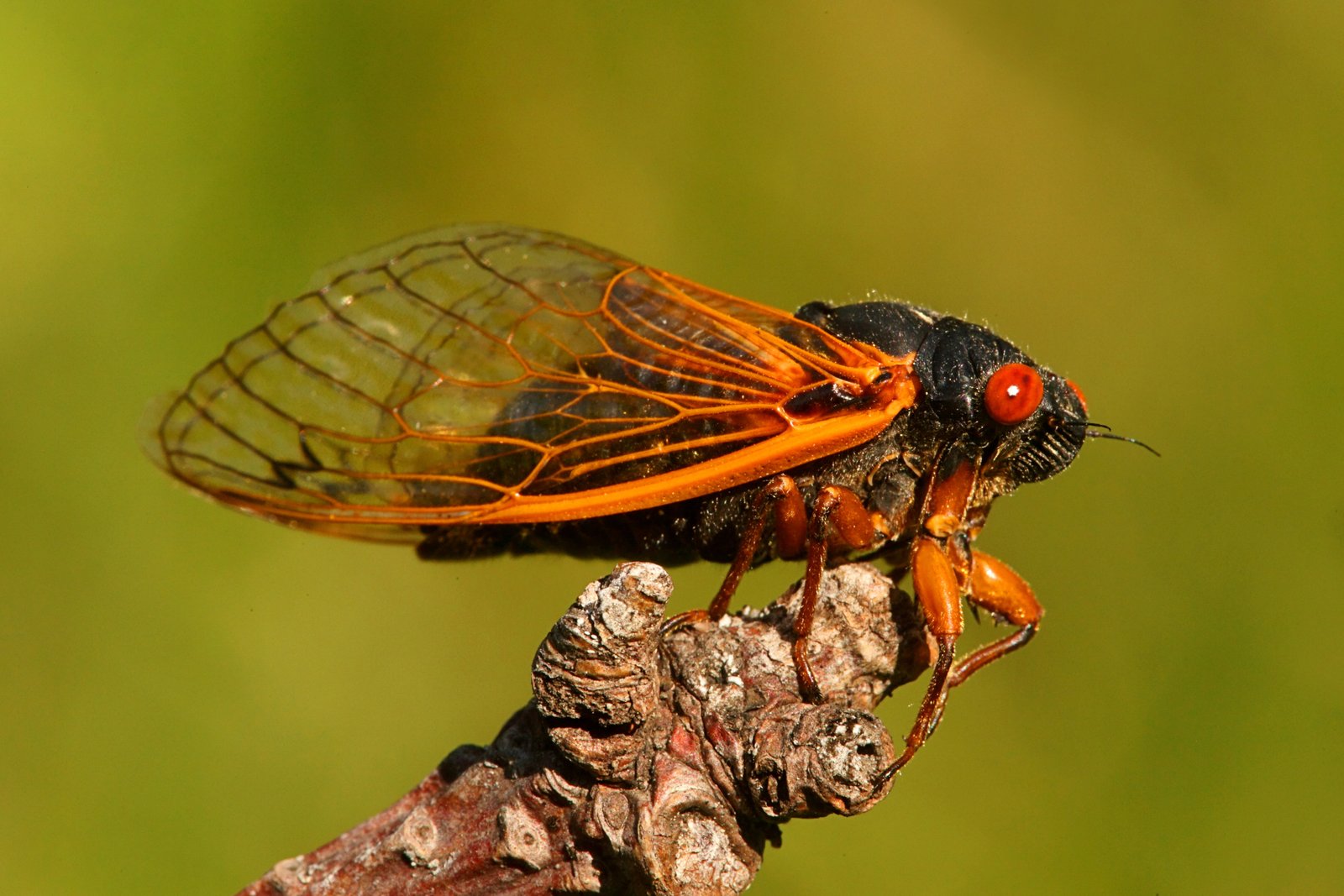
Every so often — on a schedule that’s been running since before humans built anything in Will County — the ground opens up and billions of cicadas emerge simultaneously. If you’ve lived through a brood year in northern Illinois, you remember it. The sound is deafening. The sheer numbers are difficult to comprehend. Sidewalks, trees, cars, and houses are covered in shed exoskeletons and clumsy, buzzing adults.
Periodical cicadas are different from the annual cicadas you hear every summer. Annual cicadas (the big green ones) emerge in smaller numbers every year. Periodical cicadas spend either 13 or 17 years underground as nymphs, feeding on tree root fluids, then emerge in massive synchronized broods that overwhelm predators through sheer volume.
What They Do — and Don’t Do
Periodical cicadas don’t bite, don’t sting, don’t infest homes, and don’t eat garden plants in any meaningful way. The primary concern for homeowners is egg-laying damage to young trees. Female cicadas use a saw-like ovipositor to slit small branches and lay eggs inside. On mature trees, this is insignificant — the branch tips may brown and die back (called “flagging”), but the tree recovers easily. On young trees with pencil-thin branches, particularly newly planted ornamentals, the damage can be more significant.
If you have young trees you want to protect during a brood year, lightweight mesh netting (not pesticide) is the recommended approach. Wrap trunks and major branches with fine mesh before emergence begins. Pesticide application is neither effective nor recommended for periodical cicadas — the numbers are too vast, the chemicals are indiscriminate, and the cicadas are gone within weeks.
A Natural Spectacle
Brood emergences are one of the most remarkable natural events in the Midwest. The sound of millions of male cicadas singing at once can reach 100 decibels — equivalent to a lawn mower. The crunching underfoot on sidewalks and driveways is unavoidable. Dogs and cats may eat them enthusiastically (they’re not toxic, just high in protein). And the aftermath — piles of dead cicadas and shed exoskeletons — actually provides a significant nutrient pulse for lawns and gardens as they decompose.
Periodical cicada emergences are not a pest control issue. They’re a geological-scale natural event that your yard happens to participate in. Enjoy the spectacle, protect your young trees if needed, and know that it’ll be another 13 or 17 years before it happens again.
Sanctuary Pest Control — Plainfield, IL — 815-993-3472 — sanctuarypestcontrol.com
Pest-Free Equals Worry-Free