
The Giant Wasps Digging Holes in Your Lawn Are Not What You Think
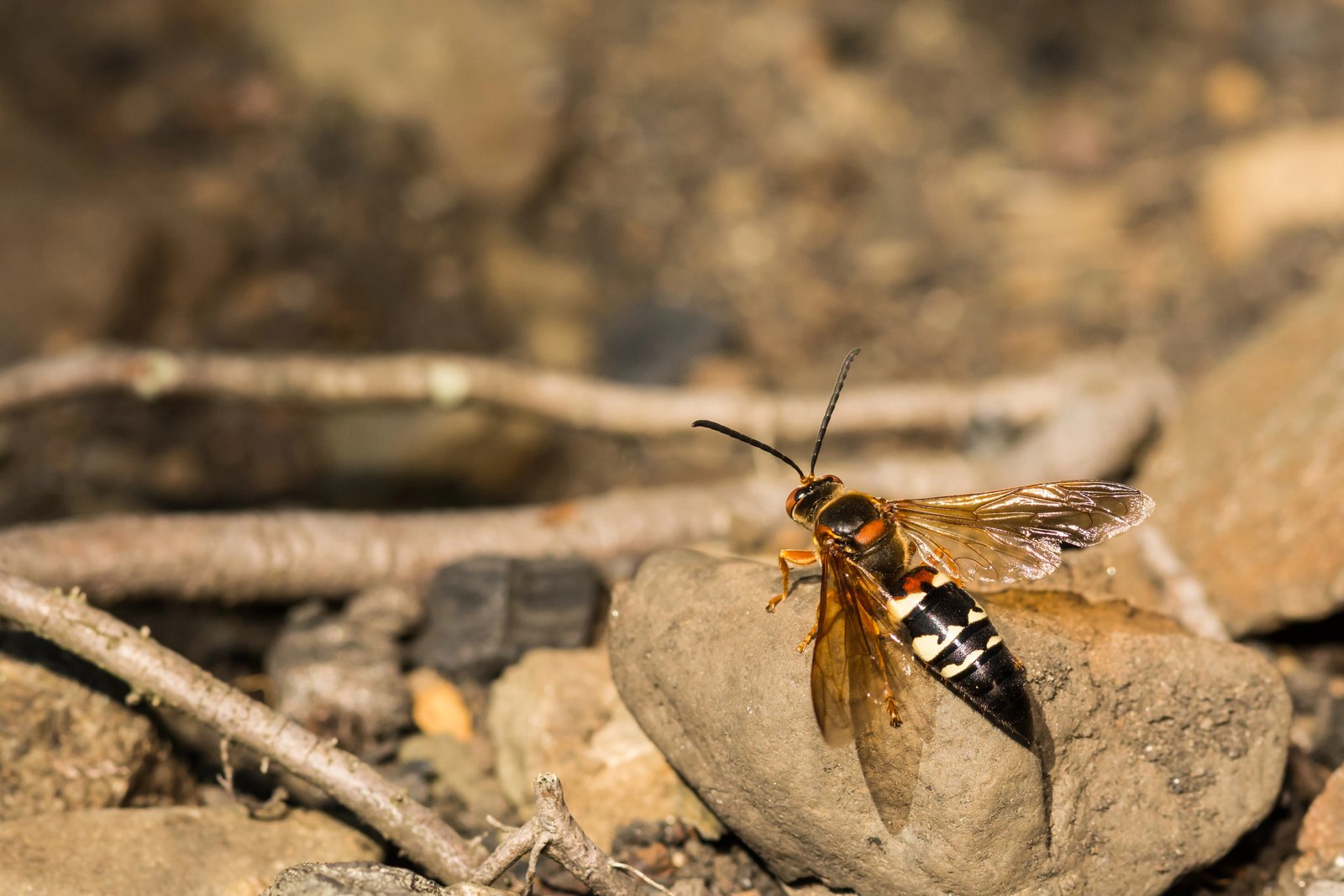
Every July, we start getting calls from homeowners who are convinced something terrifying has moved into their yard. The descriptions are consistent: enormous wasps, easily two inches long, digging holes in the lawn and flying low over the grass. Some callers have stopped mowing. A few have stopped going outside entirely.
These are Eastern cicada killers, and despite looking like something that escaped from a nature documentary, they’re one of the least threatening insects you’ll encounter.
What They’re Doing in Your Yard
Cicada killers are solitary wasps. Each female digs her own burrow in bare or thin-turf areas of your lawn — often along sidewalk edges, in garden beds, near retaining walls, or wherever soil is sandy and well-drained. She hunts cicadas, paralyzes them with her sting, and carries them back to the burrow to serve as food for her developing larvae. One burrow, one female, one independent operation. There is no hive, no colony, and no coordinated defense.
The males are the ones that generate most of the panic. Male cicada killers patrol the nesting area aggressively, hovering and buzzing at anything that moves — people, dogs, lawn mowers. It’s intimidating behavior from a two-inch wasp. But here’s the key: male cicada killers have no stinger. The display is pure bluff. The females can sting but are docile toward humans and will only do so if directly grabbed or stepped on.
Should You Do Anything About Them?
In most cases, the best approach is tolerance. Cicada killers are active for about four to six weeks in July and August, then they’re gone for the year. They’re beneficial predators that help control cicada populations. The burrows can displace soil and create unsightly mounds in lawn areas, but the damage is cosmetic and temporary.
If you want to discourage them from returning, the most effective approach is maintaining thick, healthy turf grass and eliminating the bare or thin-soil patches they prefer for nesting. They don’t like dense turf because it’s harder to burrow through.
For properties where cicada killer activity is causing significant lawn damage, contact Sanctuary Pest Control at 815-993-3472 for options.
Internal link → Pest Guide — Cicada Killer entry