
Those Aren’t Ladybugs — And Here’s Why They’re All Over Your House
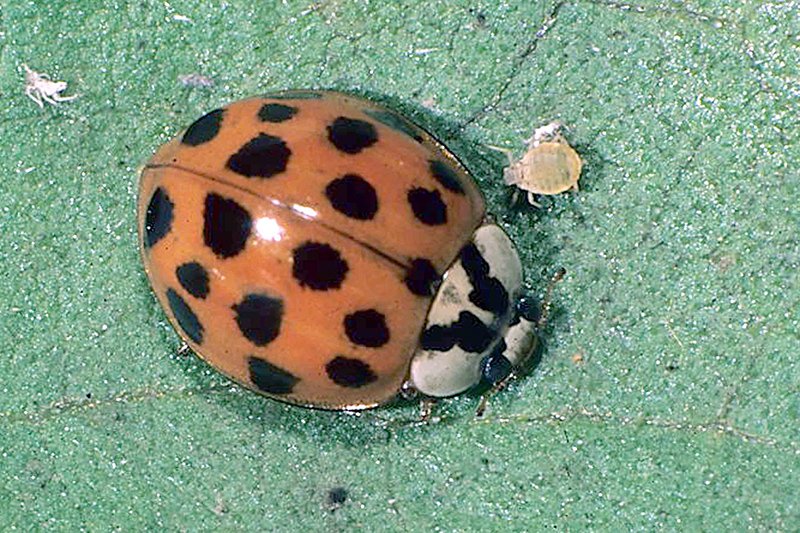
Every October, the phones light up. Homeowners describe swarms of ladybugs covering their homes, getting inside, biting people, staining walls, and producing an awful smell. The callers are right about everything except the identification: these aren’t ladybugs. They’re Asian lady beetles, and the distinction matters.
How They Got Here
Multicolored Asian lady beetles were deliberately introduced to the United States by the USDA as biological control agents for agricultural pests, particularly aphids. They’re excellent at that job — a single beetle can consume thousands of aphids in its lifetime. The problem is that the species also has a behavior that native ladybugs don’t: in their native Asian habitat, they overwinter in cliff faces and light-colored rock outcroppings. In suburban Illinois, the closest equivalent is the sunlit side of your house.
The scale of fall aggregations can be staggering. The University of Illinois Extension documents swarms numbering in the tens of thousands clustering on the sunlit sides of light-colored buildings. They’re attracted by contrast — light-colored walls against dark trim, south and west-facing exposures, and homes near agricultural fields or wooded areas where aphid populations supported large beetle populations all summer.
Why They’re Worse Than Native Ladybugs
Native ladybugs are gentle, rarely enter homes, and don’t cause problems. Asian lady beetles are a different story. They can and do bite — not aggressively, but when they land on skin they sometimes nip, producing a mild pinching sensation. More problematic: when disturbed or threatened, they secrete a foul-smelling, yellowish-orange fluid from their leg joints called reflex bleeding. This fluid stains walls, curtains, carpets, and clothing, and the odor is persistent.
The easiest way to tell them apart: look for the black M-shaped marking on the white area directly behind the head. Asian lady beetles come in a wide range of colors — from pale tan to bright orange-red — and their spot patterns vary wildly, from no spots to many. Native ladybugs are typically a consistent red with neat black spots and lack the M-shaped head marking.
Getting Ahead of the Problem
Like boxelder bugs, the effective treatment window is before they enter. Once Asian lady beetles are inside wall voids, removing them is impractical. A professional perimeter treatment applied in September creates a barrier that reduces entry. Sealing your home’s exterior — caulking gaps around windows, doors, utility penetrations, and soffit joints — eliminates the access points they share with every other fall invader.
If they’re already inside, vacuum them carefully (avoid crushing, which triggers the staining fluid) and empty the vacuum promptly. Light traps can help — the Illinois Department of Public Health suggests placing a desk lamp over a tray of soapy water in a dark room; beetles will fly toward the light and become trapped.
Our quarterly pest control program includes targeted fall perimeter treatments timed for the invader season. If Asian lady beetles have been a recurring problem for your home, getting treatment in place before the swarms arrive is the most effective approach. Contact Sanctuary Pest Control at 815-993-3472.
Internal link → Quarterly Pest Control service page