Eastern Subterranean Termite Identification & Control
Reticulitermes flavipes
Eastern subterranean termites are the only termite species commonly found in Illinois, and they are among the most destructive insects in North America.
Quick Identification
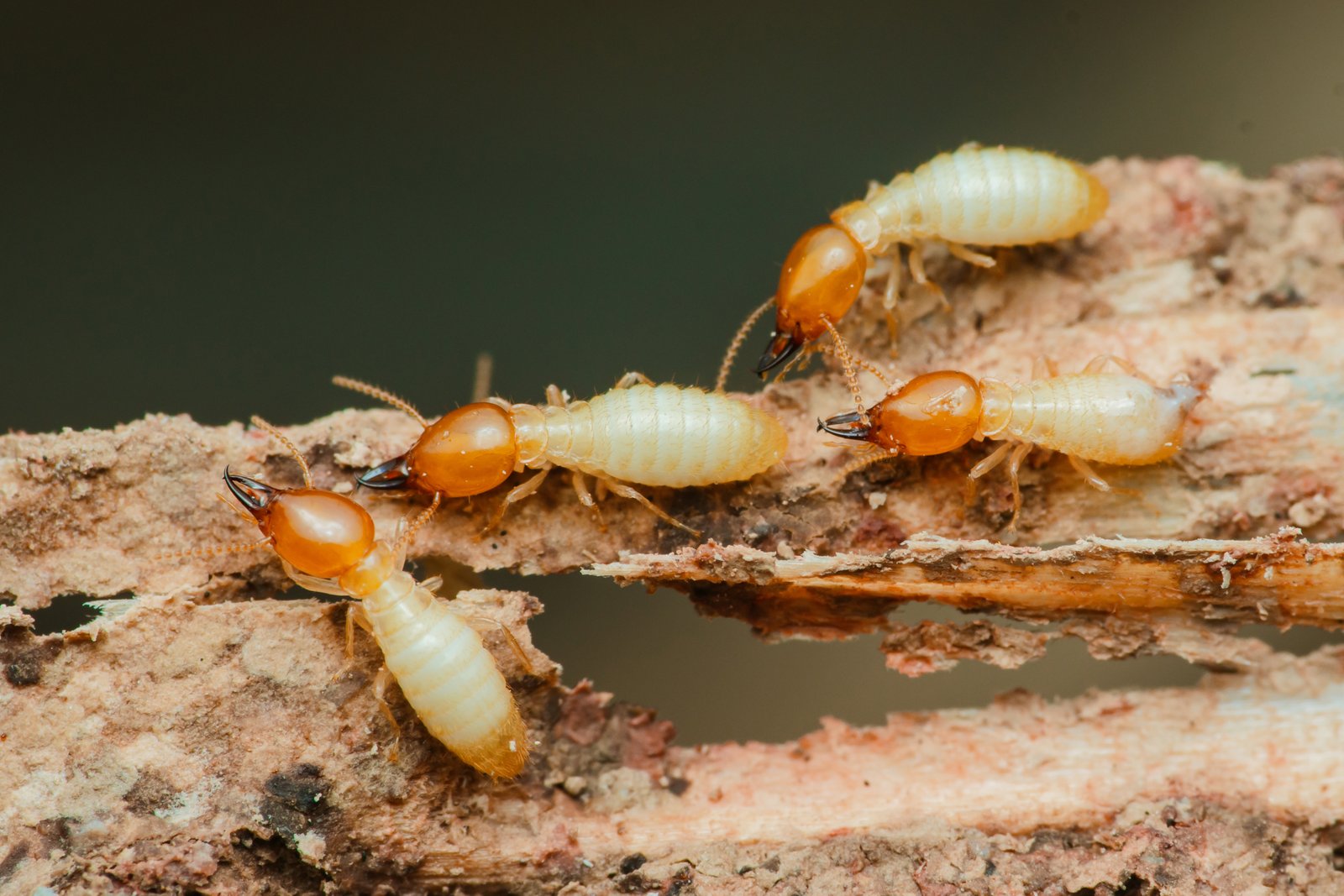
- Workers: About ⅛ inch; pale, creamy-white; soft-bodied; found inside mud tubes and infested wood
- Soldiers: Similar size; darker head with large mandibles
- Swarmers: About ⅜ inch; dark brown to black body; two pairs of equal-length wings that are shed after mating; emerge in spring
- Key Signs: Pencil-thin mud tubes on foundation walls, floor joists, and support posts; hollow-sounding wood; discarded wings near windows and doors; paint that bubbles or peels
- Active Season: Year-round underground; swarmers emerge in spring (typically March–May when temperatures reach about 70°F)
- Risk Level: High — the most destructive insect pest of wood structures in Illinois; causes billions in damage nationally each year
The Silent Destroyer
Eastern subterranean termites are the only termite species commonly found in Illinois, and they are among the most destructive insects in North America. Termite damage in the United States costs an estimated $6.8 billion annually (adjusted for inflation), and standard homeowner’s insurance does not cover it. These termites work silently inside walls and structural members, often causing significant damage before any visible signs appear.
Subterranean termites live in large underground colonies that can number in the hundreds of thousands. They require constant contact with soil moisture to survive, which is why they build the distinctive pencil-thin mud tubes that are the most recognizable sign of their presence. These tubes provide a protected, humid pathway from the soil colony to the wood they’re feeding on. You’ll find them running up foundation walls, along floor joists, on support posts, and on plumbing penetrations.
Termites feed on the cellulose in wood, working along the grain and hollowing out structural members from the inside. Infested wood may look perfectly normal on the surface while being severely compromised inside. Tapping suspected wood with a screwdriver can reveal a hollow sound. Other signs include paint that bubbles or peels (from the moisture termites generate), sagging floors, and doors or windows that suddenly stick.
Swarmers: The Visible Warning
Most homeowners first discover termites when swarmers appear. These winged reproductive termites emerge from mature colonies in spring, typically on a warm day after rain, often in March through May. They’re frequently mistaken for flying ants. The key differences: termite swarmers have straight antennae (ants have elbowed antennae), a broad waist (ants have a narrow waist), and two pairs of equal-length wings (ant wings are unequal in length). Swarmers shed their wings quickly after emergence — finding piles of small, translucent wings near windows, doors, or in basement window wells is a strong indicator of a termite colony in or near your home.
Finding swarmers indoors means a colony is established close to your home, possibly within the structure itself. Get a termite specialist out for inspection right away.
Prevention
Termite prevention focuses on eliminating the conditions they exploit: wood-to-soil contact (porch posts, deck supports, siding that touches the ground), moisture accumulation near the foundation (poor drainage, clogged gutters, leaky exterior faucets), stored firewood or lumber against the house, and heavy mulch against the foundation. Maintaining a visible concrete foundation — with no soil, mulch, or landscaping covering the base of the foundation wall — allows you to spot mud tubes early.
Sanctuary doesn’t inspect or treat termites. Termite work is a different specialty — done by firms with the equipment, training, and warranty structures the job requires (including WDI/NPMA-33 reports for real estate transactions). If you suspect termite activity, contact a local termite specialist directly. We're happy to point you toward someone reputable if you give us a call at 815-993-3472.
Related pests
Sources: Illinois Department of Public Health; Anderson Pest Solutions — Termite Identification; Terminix — Subterranean Termites; Fox Valley Environmental Pest Control.
Spotted eastern subterranean termite at your home?
Free inspection — we ID the species, confirm the issue, and give you a fixed quote before any treatment.