Powderpost Beetle Identification & Control
Lyctus spp. / Anobium spp.
Powderpost beetles are a group of wood-boring beetles that get their name from the fine, powder-like frass their larvae produce as they tunnel through wood.
Quick Identification
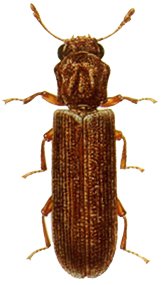
- Size: Adults ⅛ to ¼ inch long
- Color: Reddish-brown to dark brown; slender, elongated body
- Key Features: Tiny, round exit holes in wood surface (about 1/16 to 1/8 inch diameter); fine, powdery frass (like talcum powder or flour) beneath infested wood; adults emerge in spring and summer
- Habitat: Hardwood flooring, furniture, trim, paneling, structural lumber; basements, garages, and crawl spaces with exposed wood
- Active Season: Adults emerge spring through summer; larvae feed year-round inside wood
- Risk Level: Moderate — can cause significant damage to hardwood items and structural wood over time; re-infestations compound damage
The Quiet Wood Borer
Powderpost beetles are a group of wood-boring beetles that get their name from the fine, powder-like frass their larvae produce as they tunnel through wood. The term covers several beetle families: Lyctidae (true powderpost beetles, which infest hardwoods like oak, ash, and walnut), Anobiidae (which can infest both hardwoods and softwoods including structural pine framing), and Bostrichidae (false powderpost beetles, less common in our area).
The lifecycle is what makes powderpost beetles difficult: adult females lay eggs in the pores or cracks of wood. The larvae hatch and tunnel through the wood for one to five years, feeding on cellulose and starch. When they mature, they bore exit holes through the surface and emerge as adults, leaving behind the characteristic tiny round holes and piles of fine powder. New adults can re-infest the same piece of wood, meaning that untreated infestations compound over generations.
Powderpost beetles are often introduced to homes through infested lumber, hardwood flooring, antique furniture, or firewood. High humidity environments — basements, crawl spaces, garages — are most susceptible because the beetles prefer wood with higher moisture content. Signs of active infestation include fresh exit holes with sharp, clean edges and light-colored frass accumulating beneath infested wood. Old, inactive exit holes will appear darker and weathered with no fresh powder.
What to Do
If you’re finding fine powder beneath wood surfaces with tiny round holes, you may have an active powderpost beetle infestation. Don’t panic — powderpost beetles work slowly, and damage accumulates over years, not weeks. However, because re-infestation is common, the problem won’t resolve on its own. Reducing humidity in affected areas (below 50% relative humidity) makes wood less hospitable to beetles. Finishing, sealing, or varnishing bare wood surfaces prevents egg-laying.
Sanctuary Pest Control can identify powderpost beetle activity during inspections and help distinguish active infestations from old, inactive damage. For treatment of active infestations in structural wood, we’ll refer you to a specialist who can assess whether localized treatment or fumigation is appropriate. Contact us at 815-993-3472.
Sanctuary Pest Control — Plainfield, IL — 815-993-3472 — sanctuarypestcontrol.com
Pest-Free Equals Worry-Free
Related pests
Sources: Illinois Department of Public Health — Wood-Destroying Insects; Terminix — Powderpost Beetles; Guardian Pest Control — Wood Destroying Insects in Indiana and Illinois.
Spotted powderpost beetle at your home?
Free inspection — we ID the species, confirm the issue, and give you a fixed quote before any treatment.