Wheel Bug Identification & Control
Arilus cristatus
The wheel bug is North America's largest assassin bug and a serious garden predator. Beneficial, but the bite is genuinely painful. Don't handle it.
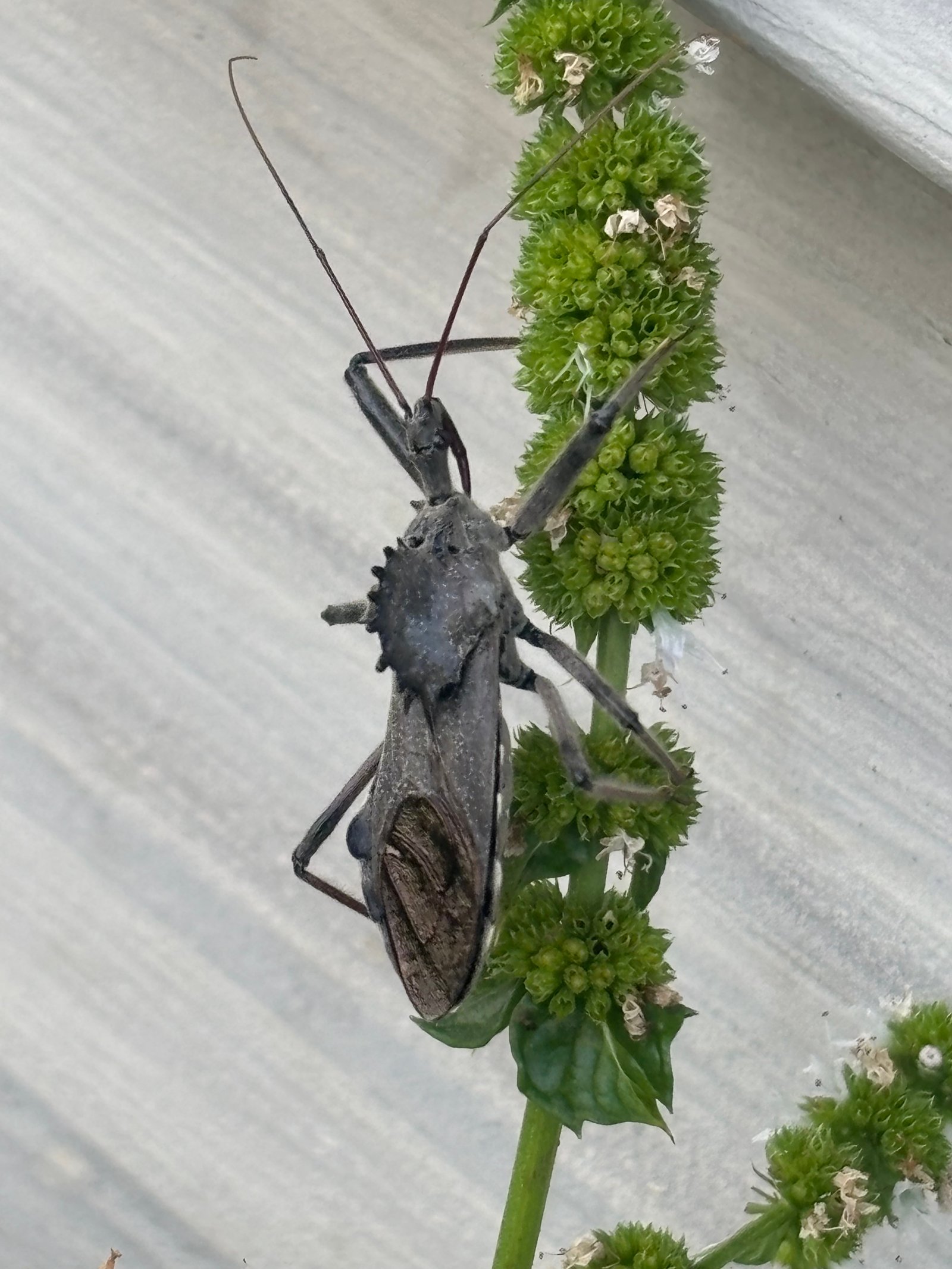
Photographed by Sanctuary Pest Control in Plainfield, IL.
The wheel bug is the largest assassin bug in North America and one of the most effective predators in an Illinois garden. It's also the one insect on this page you should never pick up.
Quick Identification
- Size: 1 to 1¼ inches long — one of the largest true bugs in North America
- Color: Uniform gray to charcoal, sometimes with a slight brown cast
- Key Features: A raised, toothed crest on the back of the thorax that looks like half a cogwheel — no other insect in North America has it
- Also look for: Long, thin, dark antennae; stout curved beak folded beneath the head; elongated grasping front legs
- Habitat: Gardens, shrubs, flowering plants, tree trunks, occasionally exterior walls in fall
- Active Season: Adults most visible late summer through fall
- Risk Level: Beneficial predator — but capable of a very painful defensive bite if handled
The Cogwheel Is the Giveaway
There is no other insect in North America with the wheel bug's crest. That raised semicircular row of teeth on the pronotum makes identification straightforward once you've seen it — it genuinely looks like a gear half-buried in the insect's back. Nobody knows exactly what it's for, though the leading guess is defense against birds.
Everything else about the wheel bug is built for hunting. The elongated front legs grab and hold prey. The stout curved beak, folded back under the head when not in use, punches into the prey and injects saliva that paralyzes it and liquefies its tissue. The wheel bug then drinks the contents.
That sounds grim, and it is — but the list of things it eats is a list of things you want gone. Wheel bugs prey heavily on caterpillars, including tent caterpillars and cabbage worms, along with Japanese beetles, stink bugs, aphids, and sawfly larvae. A wheel bug in your garden is doing free work.
Young wheel bugs look completely different from adults: bright red-orange abdomens with black legs and no crest yet. People often report them as an entirely different insect.
The One Real Warning
Wheel bugs are not aggressive and will not chase or seek out people. But if you pick one up, trap it against your skin, or corner it, it can and will bite defensively — and that bite uses the same beak and the same tissue-dissolving saliva it uses on caterpillars.
Accounts consistently describe it as more painful than a wasp or hornet sting, with the pain lasting hours and the site sometimes remaining sore or numb for a week or more. It isn't dangerous the way a venomous spider bite can be, and it isn't a medical emergency for most people, but it's genuinely unpleasant and entirely avoidable.
The rule is simple: look, don't touch. If one is somewhere you'd rather it wasn't, coax it onto a stick or a piece of paper and move it. Don't brush it off bare-handed.
What to Do
Nothing, in almost every case. Wheel bugs are solitary, they don't reproduce indoors, they don't damage structures, and they don't come inside in numbers. Occasionally one turns up on an exterior wall in fall or wanders through an open door — carry it back outside on a piece of cardboard.
Sanctuary Pest Control does not treat for wheel bugs, and we'd discourage anyone from trying to. Broad-spectrum insecticide applied to gardens and shrubs kills the wheel bugs along with the pests they're eating, which reliably leaves you with more aphids and caterpillars than you started with.
If you've found one and want to be sure that's what it is, send us a photo.
Related pests
Sources: University of Illinois Extension; Illinois Department of Natural Resources; Forest Preserve District of Will County (reconnectwithnature.org).
Not sure what you're looking at?
Send us a photo. We'll identify it and tell you what you're dealing with — even when it's not something we treat.