Squash Bug Identification & Control
Anasa tristis
Bronze eggs in a neat V pattern on the underside of a squash leaf mean squash bugs. Here's how to identify them and stop them before they hatch.
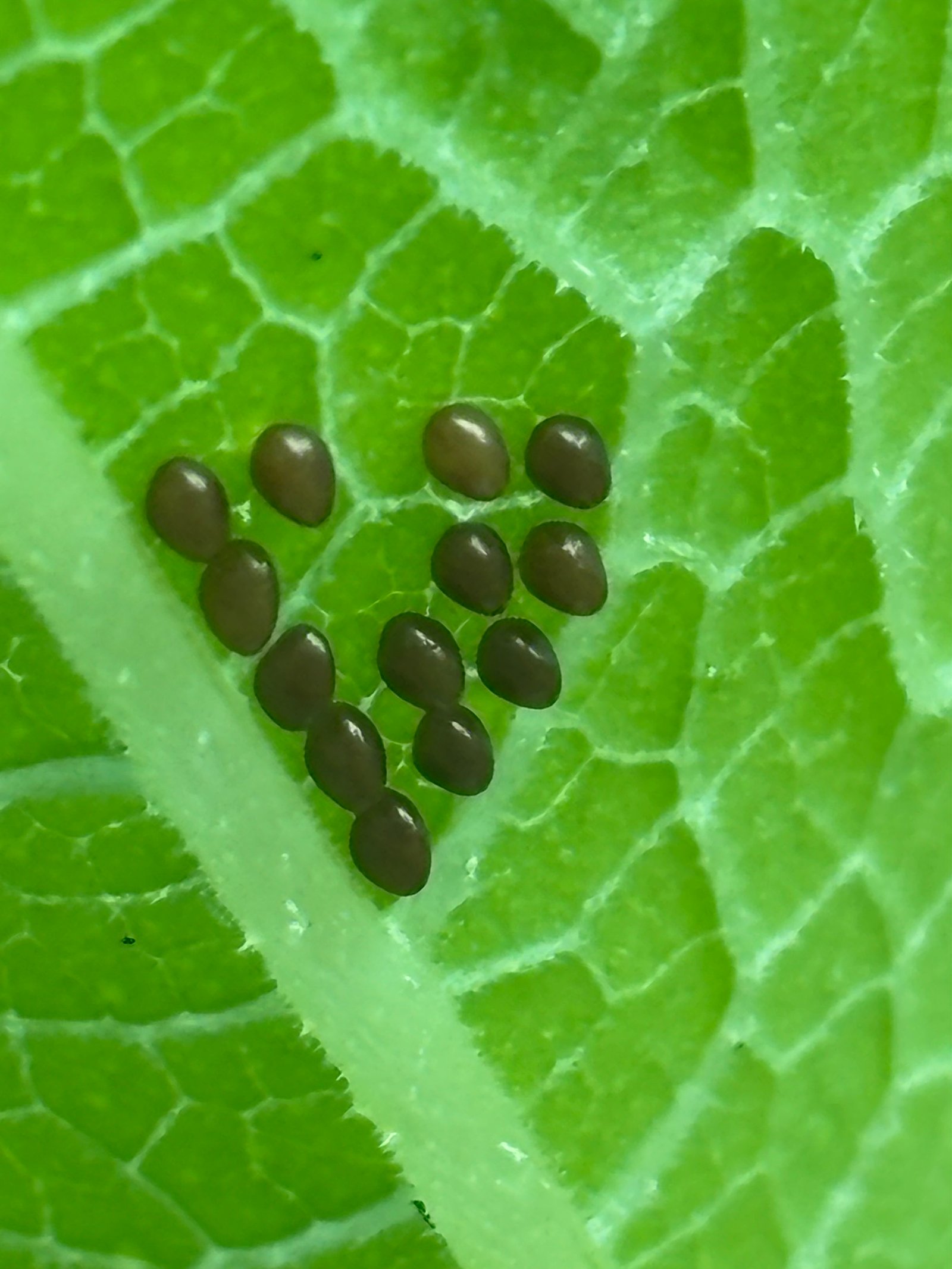
Photographed by Sanctuary Pest Control in Plainfield, IL.
If you grow squash, zucchini, pumpkins, or cucumbers in Illinois, you will meet this insect. The eggs are the easiest stage to find — and by far the easiest stage to deal with.
Quick Identification
- Eggs: Small, oval, shiny, bronze to coppery-brown. Laid in tidy clusters on the undersides of leaves, usually lined up along the veins in a distinct V or triangle
- Nymphs: Pale gray-green with black legs when young, turning grayer with each molt; cluster together near the eggs
- Adults: About ⅝ inch, flat-backed, dark gray-brown, with orange and brown barring along the abdomen edges
- Host plants: Squash, zucchini, pumpkins, gourds, cucumbers, melons
- Active Season: Late spring through fall; adults overwinter under debris and garden litter
- Risk Level: Garden pest only — no threat to structures, food storage, pets, or people
The Eggs Are the Signature
Squash bug eggs are one of the most recognizable things in a vegetable garden. They're laid on the undersides of leaves in a neat, deliberate arrangement — usually a V or triangle tucked into the angle where two veins meet. The eggs start pale bronze and darken toward coppery brown as they mature, and they have a glossy finish that catches light.
That precision is what distinguishes them from the other eggs you'll find out there. Brown marmorated stink bug eggs are pale green to white, barrel-shaped rather than oval, and laid in a loose raft of around 28. Lady beetle eggs are yellow-orange spindles standing on end in a tight cluster. Nothing else lays bronze ovals in a V along the veins.
Eggs hatch in one to two weeks. The nymphs emerge pale and cluster together near the hatch site before spreading out.
Why They Matter in the Garden
Squash bugs feed by piercing stems and leaves and drawing out sap. Their saliva is toxic to the plant, which causes a characteristic pattern of damage: leaves develop yellow speckling, then brown, then go crisp and dark. Vines wilt — often starting at the tip and running back toward the crown — and heavy feeding can kill a young plant outright.
They can also transmit cucurbit yellow vine disease, which collapses plants suddenly and completely.
Adults overwinter under boards, in dead vines, beneath mulch and garden debris, and occasionally in the gaps around foundations and outbuildings. That last habit is why they sometimes turn up on a patio or against a house wall in fall — but they don't come indoors to stay, don't feed on anything in your house, and don't reproduce inside.
What to Do
Squash bug control is a gardening job, not a pest control job, and the egg stage is where you win it.
Check the undersides of leaves every few days from early summer on. Egg clusters scrape off easily with a fingernail, a butter knife, or a strip of duct tape pressed over them. Every cluster you remove is a dozen-plus bugs that never hatch, and this is far more effective than anything you can do once the nymphs disperse.
Beyond that: clear dead vines and garden debris at the end of the season so the adults have nowhere to overwinter, use row covers on young plants and remove them at flowering so pollinators can get in, and lay a board flat in the garden overnight — adults gather underneath it and can be collected in the morning.
Sanctuary Pest Control is a residential structural pest control company. We don't treat gardens or vegetable crops, so this isn't a service we offer. If you've found eggs and want confirmation of what they are before you start scraping, send us a photo.
Related pests
Sources: University of Illinois Extension; Illinois Department of Public Health.
Not sure what you're looking at?
Send us a photo. We'll identify it and tell you what you're dealing with — even when it's not something we treat.