Asian Lady Beetle Identification & Control
Harmonia axyridis
Asian lady beetles were originally introduced to the United States as biological control agents to eat aphids and other agricultural pests — and they’re.
Quick Identification
- Size: About ¼ to ⅓ inch long
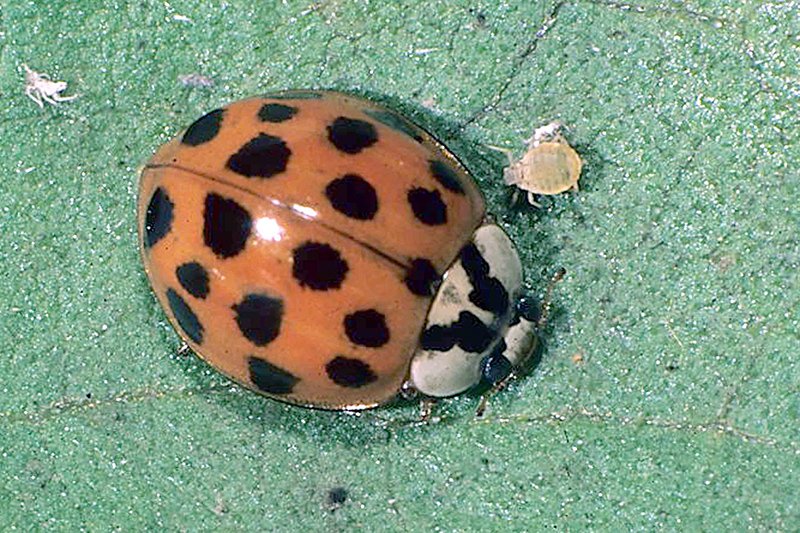
- Color: Highly variable — pale yellow-tan to deep orange-red; may have many spots, few spots, or no spots
- Key Features: Distinguished from native ladybugs by black-and-white M-shaped marking on the head area (pronotum); can release a foul-smelling orange fluid when threatened; may bite
- Common Names: Ladybug (incorrect — they’re not the same species as native ladybugs)
- Active Season: Fall swarms; emerges in spring
- Risk Level: None — nuisance + odor + staining; beneficial outdoors as aphid predators
Not Your Friendly Ladybug
Asian lady beetles were originally introduced to the United States as biological control agents to eat aphids and other agricultural pests — and they’re excellent at that job. The problem is their fall behavior: unlike native ladybugs, Asian lady beetles aggregate in enormous swarms on buildings, sometimes numbering in the thousands, and push their way indoors to overwinter in wall voids and attics.
They’re easily confused with native ladybugs, but there are important differences. Asian lady beetles have a distinctive black M-shaped (or W-shaped, depending on your perspective) marking on the white area behind their head. Their color is highly variable — from pale yellow to bright orange-red — and spot patterns range from none to many. When threatened, they secrete a foul-smelling, yellowish-orange fluid from their leg joints that stains walls, fabrics, and skin. Unlike native ladybugs, Asian lady beetles can and do bite, producing a mild pinching sensation.
The scale of fall invasions can be overwhelming — University of Illinois Extension notes they form swarms of tens of thousands on the sunlit sides of light-colored buildings. Sealing your home’s exterior before fall is the most effective prevention. Our quarterly pest control program includes perimeter treatments timed for fall invader season. Contact Sanctuary Pest Control at 815-993-3472.
Related pests
Sources: Illinois Department of Public Health (dph.illinois.gov) — Occasional Invaders; University of Illinois Extension.
Spotted asian lady beetle at your home?
Free inspection — we ID the species, confirm the issue, and give you a fixed quote before any treatment.