Carpet Beetle Identification & Control
Anthrenus spp. / Attagenus spp.
Carpet beetles are one of the most underappreciated household pests. The adults are tiny, round beetles that most homeowners dismiss as harmless — if they.
Quick Identification
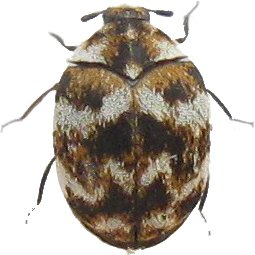
- Size: Adults about ⅛ inch; larvae up to ¼ inch
- Color: Adults: round, dark with colored scales (white, orange, yellow, brown patterns depending on species). Larvae: brown, bristly/hairy, carrot-shaped.
- Key Features: Adults often found on windowsills (trying to get outside); larvae are the damaging stage — feed on wool, silk, fur, feathers, pet hair, and dead insects; larvae have distinctive tufts of dark hair
- Habitat: Closets, under baseboards, in stored clothing, around pet bedding, in ductwork, behind furniture
- Active Season: Year-round indoors; adults more visible in spring near windows
- Risk Level: Low to moderate — larvae cause real damage to natural-fiber fabrics, furs, and taxidermy
The Hidden Fabric Destroyer
Carpet beetles are one of the most underappreciated household pests. The adults are tiny, round beetles that most homeowners dismiss as harmless — if they notice them at all. They’re often found near windows in spring, trying to get outside to feed on pollen. The adults don’t cause damage. The problem is their larvae.
Carpet beetle larvae are small, bristly, carrot-shaped grubs that feed on animal-based fibers and proteins: wool clothing and carpets, silk, fur, feathers, leather, taxidermy mounts, pet hair, and dead insects. They prefer dark, undisturbed areas — the back corners of closets, under heavy furniture, inside HVAC ductwork, in stored clothing boxes, and beneath baseboards where pet hair accumulates. The damage appears as irregular holes in fabric and bald patches on wool carpets, often mistaken for moth damage.
The Illinois Department of Public Health notes that finding the food source is the critical first step. Larvae can develop in overlooked areas like inside air ducts, behind baseboards, under heavy furniture, above false ceilings, and in attic insulation where bird or rodent nests provide food. Thorough vacuuming, cleaning stored clothing, and eliminating hair/lint buildup reduces populations. Pheromone traps can help monitor and pinpoint infestations.
For persistent carpet beetle problems, professional treatment targets the hidden harborage areas that vacuuming alone can’t reach. Contact Sanctuary Pest Control at 815-993-3472.
Related pests
Sources: Illinois Department of Public Health (dph.illinois.gov) — Clothes Moths and Carpet Beetles.
Spotted carpet beetle at your home?
Free inspection — we ID the species, confirm the issue, and give you a fixed quote before any treatment.