
Brown Recluse Spider Identification & Control
Loxosceles reclusa
The brown recluse is the most medically significant spider in Illinois. Its venom contains a dermonecrotic agent called sphingomyelinase D, which can destroy.
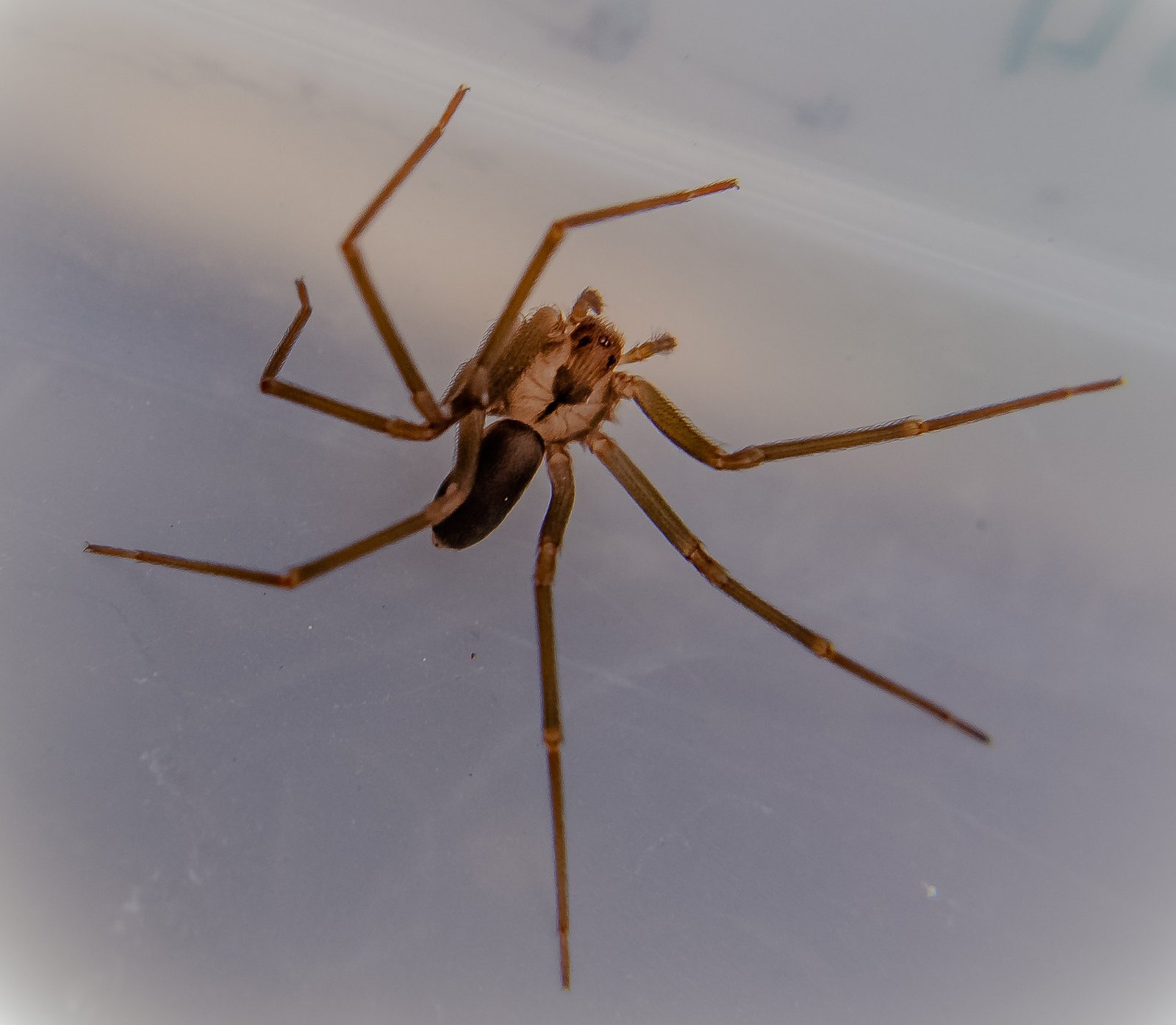
Quick Identification
- Size: Body about ½ inch long (female); ¼ inch (male) — about the size of a quarter including legs
- Color: Light brown body with darker violin-shaped marking on the back, immediately behind the eyes; uniformly colored gray-brown abdomen
- Key Features: Six eyes arranged in three pairs (most spiders have eight); smooth, uniformly colored legs without spines or banding; violin-shaped marking with the “neck” pointing toward the abdomen
- Distinguishing Trait: The six-eye arrangement is the most reliable identifier — the violin marking can be faint in young spiders and is present on some non-recluse species
- Active Season: Year-round indoors; most active at night; outdoor specimens active spring through fall
- Risk Level: High — medically significant; bite can cause tissue necrosis (skin death) requiring medical intervention
The Medical Risk Is Real — But Context Matters
The brown recluse is the most medically significant spider in Illinois. Its venom contains a dermonecrotic agent called sphingomyelinase D, which can destroy skin and underlying tissue around the bite site. In the most serious cases, a spreading necrotic wound develops that may require medical intervention, and in rare cases, the bite can cause systemic illness including fever, nausea, and destruction of red blood cells. Children are particularly vulnerable to systemic reactions.
That said, context matters. Brown recluse spiders are genuinely reclusive — they’re not aggressive and bite only when accidentally pressed against skin, typically when a person puts on shoes, clothing, or gloves that the spider has been hiding in, or when reaching into boxes and storage areas. Research from the Illinois Department of Public Health notes that even in heavily infested homes, confirmed bites are uncommon. One widely cited study documented a home where more than 2,000 brown recluses were collected over six months, yet the residents hadn’t been bitten in six years.
The more common problem is misidentification. Many spiders in Illinois are mistakenly identified as brown recluses — particularly wolf spiders and grass spiders, which are far more frequently encountered. A 2014 study in the Journal of Medical Entomology found that while brown recluses are common in southern Illinois, they become increasingly rare moving northward. In the Chicago suburbs and northern Illinois, most suspected “brown recluse sightings” are misidentified. However, Will County falls within the transition zone where brown recluses do occur, particularly in older homes and structures where they’ve been transported in boxes, furniture, or stored items.
Behavior and Habitat
Brown recluses are hunting spiders that leave their loose, flat webs at night to search for prey. During the day, they rest in dark, undisturbed locations — inside cardboard boxes, behind furniture, in closet corners, under rarely moved items, inside shoes left on the floor, and in the wood framing of crawl spaces, basements, and attics. The Illinois Department of Public Health specifically identifies wood around leaking chimney flashing, wall voids, and spaces behind baseboards as common harborage sites.
These spiders are long-lived — females can survive several years indoors — and remarkably resilient. They can go months without eating and are well-adapted to the hot, dry conditions found inside many homes. A single female that hitchhikes into a structure on a piece of furniture or a moving box can establish an infestation, because she needs to mate only once to produce eggs throughout her life, generating 150 or more spiderlings per year.
Most infestations result from spiders being transported into a structure on stored items, not from brown recluses wandering in from outside. This is why careful inspection of boxes and secondhand furniture before bringing them into your home is one of the most effective prevention measures.
What to Do If You Find One
If you find a spider you suspect is a brown recluse, capture it (safely, with a jar or container) for identification rather than killing it — accurate identification determines whether your home needs professional treatment. The key identifiers are the six eyes in three pairs and the violin-shaped marking, but these can be difficult to see without magnification. A pest control professional can confirm the identification quickly.
If brown recluse spiders are confirmed in your home, professional treatment is strongly recommended. Effective control requires an integrated approach: sticky monitoring traps placed in key locations to assess population levels, targeted interior treatments in harborage areas, reduction of clutter that provides hiding spots, and ongoing monitoring. The Illinois Department of Public Health is clear that management plans relying solely on baseboard spraying will fail.
In Plainfield and Will County
Will County sits within the transition zone for brown recluse distribution in Illinois — they’re less common here than in southern Illinois, but they do occur, particularly in older homes and in structures where they’ve been introduced through stored items. The well-established homes near Settlers’ Park and the Heritage Corridor, with their older construction, abundant storage areas, and undisturbed spaces, are the most likely locations to harbor brown recluses. If you’re finding spiders that match the description — especially in basements, closets, or storage areas — contact Sanctuary Pest Control at 815-993-3472 for professional identification and, if needed, a targeted treatment plan.
Related pests
Sources: Illinois Department of Public Health (dph.illinois.gov) — Brown Recluse and Black Widow Spiders; Illinois Department of Natural Resources (dnr.illinois.gov) — Brown Recluse; Penn State Extension — Brown Recluse Spiders; Journal of Medical Entomology (2014) — Distribution of Brown Recluse in Illinois and Iowa.
Spotted brown recluse spider at your home?
Free inspection — we ID the species, confirm the issue, and give you a fixed quote before any treatment.