
Jumping Spider Identification & Control
Family Salticidae
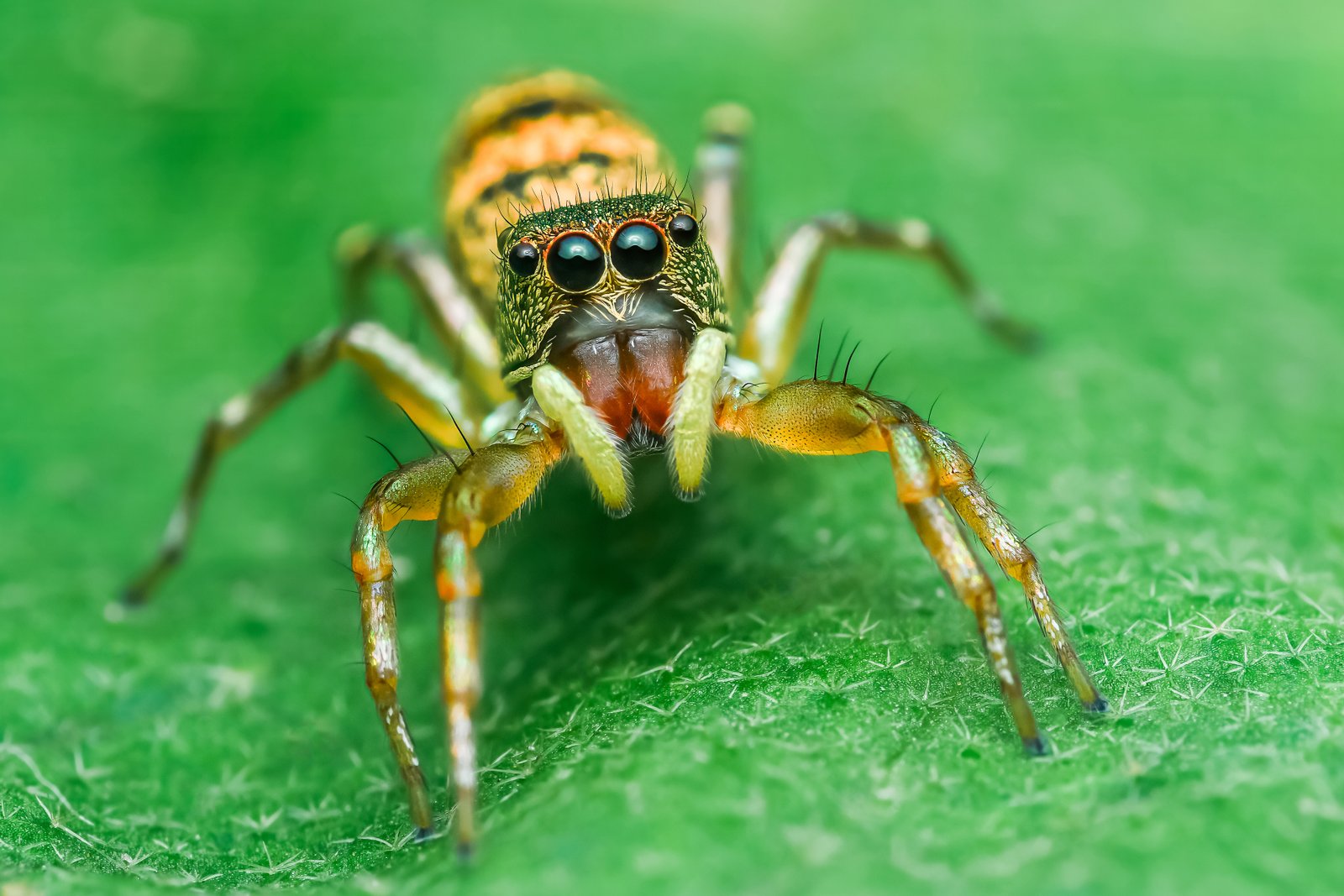
Compact, alert-looking spiders with huge forward-facing eyes. Common indoors and out across Will County. Beneficial predator, bite is rare and mild.
Quick Identification
- Size: 5–15 mm body length — smaller than most spiders people notice
- Color: Compact, often black or dark brown with white or iridescent markings; bold jumping spiders (most common) have white stripes and metallic green chelicerae
- Key Features: Two very large forward-facing eyes (plus six smaller ones), short legs relative to body, fuzzy appearance, jerky stop-and-start movement
- Distinguishing Trait: The only spiders most people will encounter that have visible "eyes" you can see watching you — and that turn to track movement
- Active Season: Spring through early fall outdoors; year-round indoors
- Risk Level: Very low — beneficial predator, not aggressive
Why Jumping Spiders Aren't a Concern
Jumping spiders are some of the most common spiders in Will County homes and yards — and they're one of the species we'd actively recommend leaving alone. They don't build webs, so they don't leave the cobweb mess that other house spiders do. They don't establish indoor populations the way occasional invaders do. And they actively hunt and eat the pests you actually want gone — small flies, gnats, mosquitoes, and other crawling insects.
Bites from jumping spiders are extremely rare and very mild — typically a localized red mark with minor itching that resolves in a day or two. They have no medical significance for healthy adults. Unlike brown recluse or some wolf spiders, jumping spider bites don't cause necrosis or systemic reactions.
Signs of Jumping Spider Activity
Spotting them on walls, windowsills, and ceilings. Jumping spiders are diurnal (daytime active) and visual hunters. They'll sit on a sunny window, the side of a deck rail, or a wall in the path of a window — anywhere they can spot prey moving. They notice you noticing them and will often turn to face you with those big forward eyes.
No webs. Jumping spiders don't build prey-catching webs. The only silk they spin is a small dragline as a safety tether (so they don't fall when they jump) and small silken retreats they hide in at night, often tucked under siding, in crevices, or behind curtain folds. If you find a web, it's not from a jumping spider.
Quick, deliberate movement. Other spiders scatter when surprised. Jumping spiders pause, reposition, and assess. They move in short bursts and can leap surprisingly far for their size — sometimes several inches in a single jump.
In Plainfield and Will County
The most common jumping spider in our area is Phidippus audax, the bold jumping spider — black with white spots and bright metallic green or iridescent fangs. They show up on south-facing exterior walls, around window frames, and inside garages and screened porches throughout the warm months. Indoors, they tend to be solitary; you'll spot one, not a population.
Sanctuary's quarterly perimeter treatments don't specifically target jumping spiders — and we'd discourage spot-treating them when you find one. They're working for you. If you need them out of a specific space, the catch-and-release approach (cup over, paper underneath, walk outside) is the right move.
Related pests
Sources: BugGuide.net — Family Salticidae; University of Illinois Extension
Spotted jumping spider at your home?
Free inspection — we ID the species, confirm the issue, and give you a fixed quote before any treatment.