Carpenter Bee Identification & Control
Xylocopa virginica
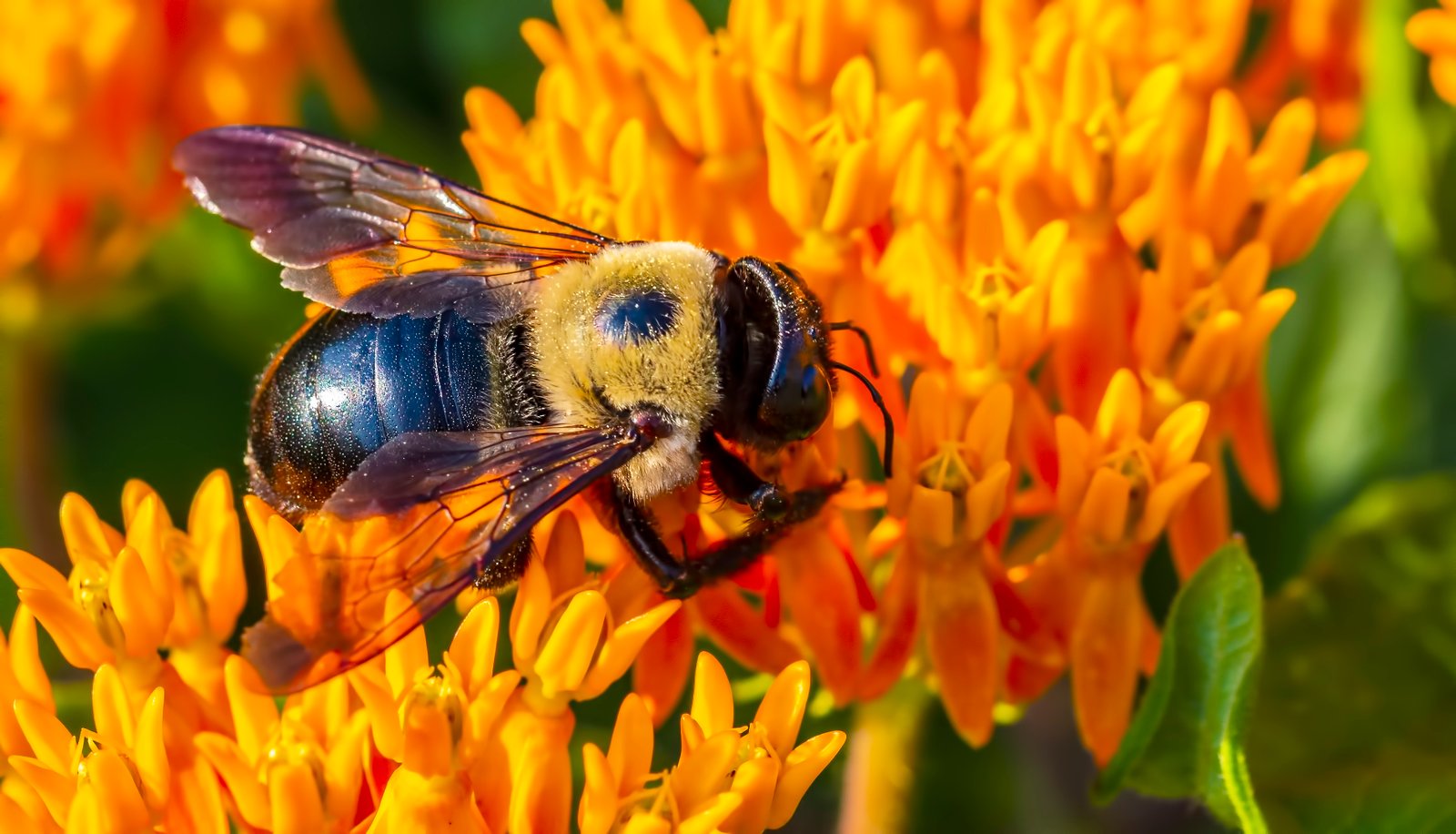
Carpenter bees resemble bumble bees at first glance, but the key difference is the abdomen: carpenter bees have a smooth, shiny black abdomen, while bumble.
Quick Identification
- Size: About 1 inch long — similar to bumble bees
- Color: Yellow fuzzy thorax with shiny, smooth black abdomen (bumble bees have fuzzy abdomens)
- Key Features: Drills perfectly round, ½-inch diameter holes in untreated wood; males hover aggressively near nest sites but cannot sting; females can sting but rarely do
- Nest Type: Tunnels drilled into wood — fascia boards, deck railings, porch posts, window trim, and unpainted/unstained wood structures
- Active Season: Spring through summer; adults emerge in April–May
- Risk Level: Low sting risk / Moderate property damage risk
The Bee That Drills Into Your House
Carpenter bees resemble bumble bees at first glance, but the key difference is the abdomen: carpenter bees have a smooth, shiny black abdomen, while bumble bees are fuzzy all over. This distinction matters because carpenter bees bore into wood to create nesting tunnels, and the damage accumulates over years when multiple generations reuse and expand the same tunnels.
Each spring, female carpenter bees drill perfectly round, half-inch diameter holes into untreated wood — fascia boards, deck railings, porch columns, window trim, and siding. The tunnels extend several inches into the wood where the female lays her eggs on a bed of pollen. The emerging brood often returns to nest in the same wood the following spring, gradually expanding the tunnel network. Over several years, this can weaken structural wood and create entry points for moisture damage.
The males are the ones most homeowners notice first. Male carpenter bees hover aggressively near nest sites, buzzing and dive-bombing anyone who approaches. Despite the intimidating behavior, males cannot sting — it’s a bluff. Females can sting but very rarely do, even when handled.
Prevention is the best approach: painting or staining exposed wood deters carpenter bees because they prefer untreated surfaces. If carpenter bees are actively drilling into your home’s trim or structural wood, contact Sanctuary Pest Control at 815-993-3472 for targeted treatment of active nesting sites.
Related pests
Sources: Illinois Department of Public Health (dph.illinois.gov) — Bees and Wasps; Forest Preserve District of Will County.
Spotted carpenter bee at your home?
Free inspection — we ID the species, confirm the issue, and give you a fixed quote before any treatment.