Eastern Cicada Killer Identification & Control
Sphecius speciosus
Every July, Sanctuary Pest Control’s phone rings with panicked homeowners describing enormous wasps digging holes in their lawns. These are cicada killers, and.
Quick Identification
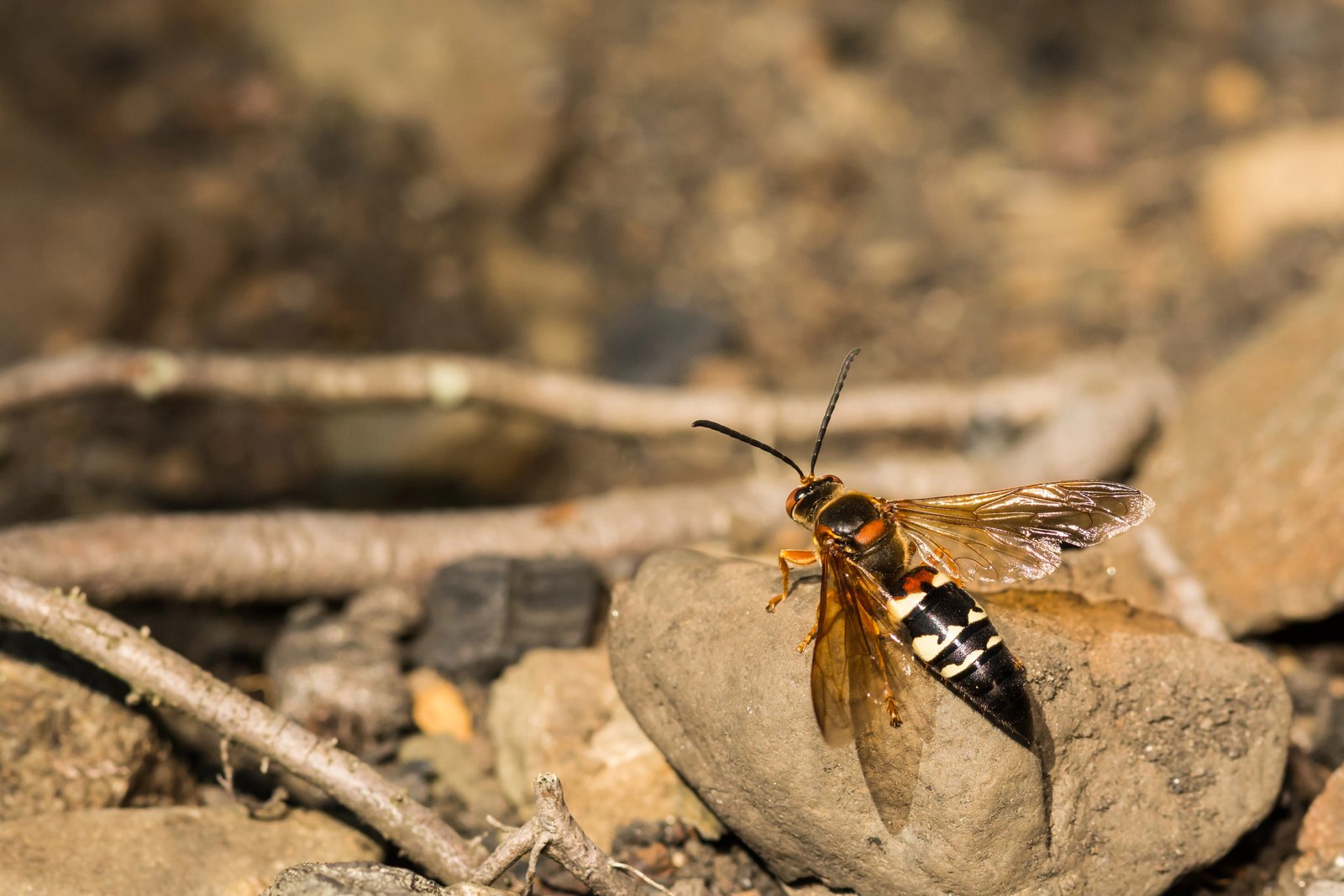
- Size: Up to 2 inches long — one of the largest wasps in North America
- Color: Reddish-brown head and thorax, black abdomen with yellow banding
- Key Features: Enormous size; digs burrows in bare or sandy soil in lawns; solitary; hunts cicadas
- Active Season: July through August, coinciding with cicada emergence
- Risk Level: Low — despite terrifying appearance, they rarely sting humans; males cannot sting at all
Terrifying to Look At, Harmless to You
Every July, Sanctuary Pest Control’s phone rings with panicked homeowners describing enormous wasps digging holes in their lawns. These are cicada killers, and while they look like something from a horror movie, they’re genuinely one of the least threatening stinging insects you’ll encounter.
Cicada killers are solitary wasps. Each female digs her own burrow in bare or sandy soil — often in lawns, along sidewalks, in garden beds, or at the base of retaining walls. She hunts cicadas, paralyzes them with her sting, and carries them back to the burrow to feed her developing larvae. The males are the ones you’ll see hovering and buzzing aggressively around the nesting area, but males have no stinger at all. Females can sting but are docile toward humans and rarely do so unless grabbed or stepped on.
The primary concern with cicada killers is cosmetic — multiple females nesting in the same area can create unsightly soil mounds and displace enough dirt to damage lawn areas. Maintaining thick, healthy turf grass and eliminating bare soil patches reduces the appeal of your lawn as a nesting site. In most cases, cicada killers are best tolerated for the few weeks they’re active — they’ll be gone by mid-August. If the population is causing significant lawn damage, contact Sanctuary Pest Control at 815-993-3472 for options.
Related pests
Sources: University of Illinois Extension Home, Yard & Garden Newsletter; Illinois Department of Natural Resources — Wasps.
Spotted eastern cicada killer at your home?
Free inspection — we ID the species, confirm the issue, and give you a fixed quote before any treatment.