Cluster Fly Identification & Control
Pollenia rudis
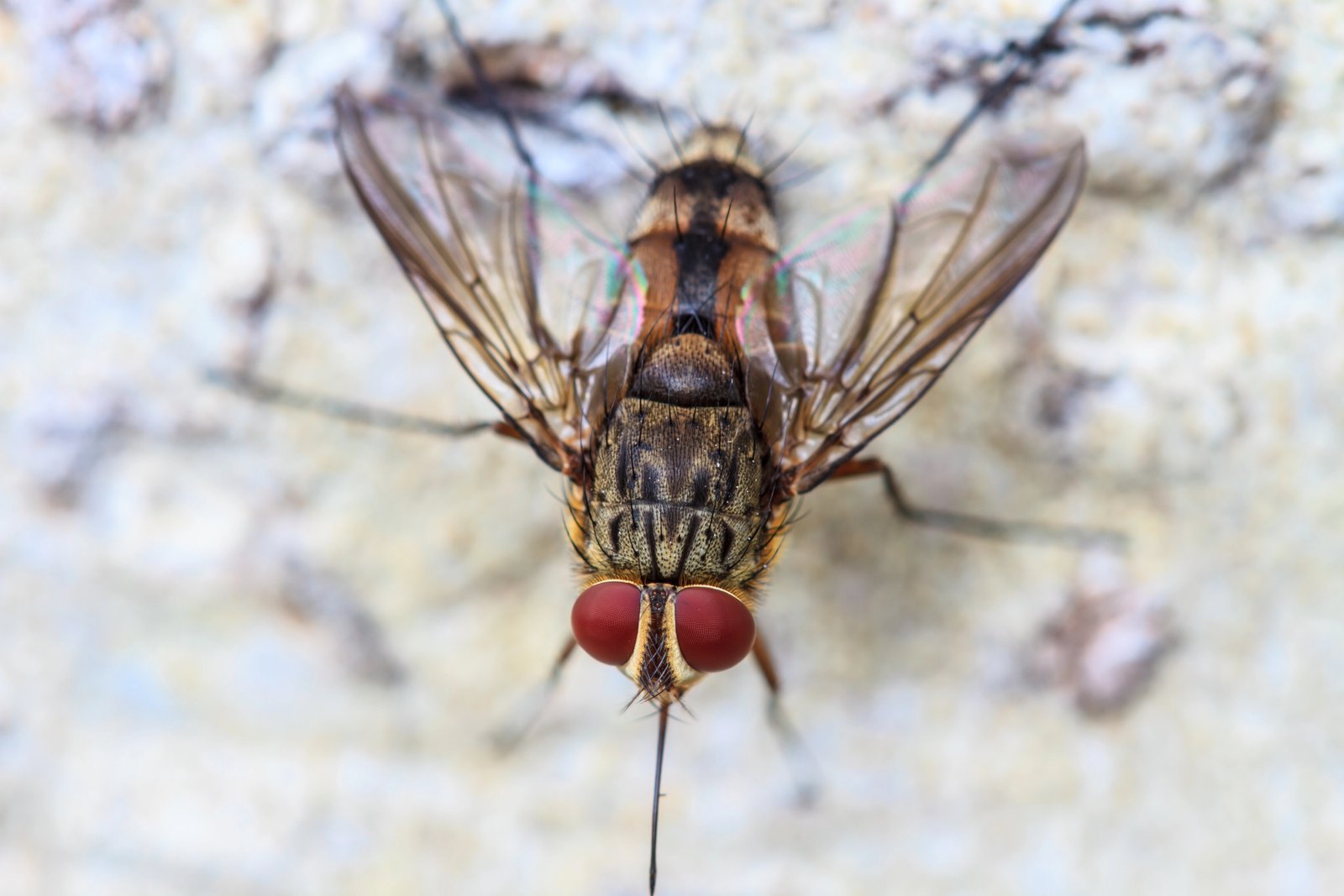
Cluster flies look similar to house flies but are slightly larger, move more sluggishly, and have distinctive golden hairs on their upper body. They get their.
Quick Identification
- Size: Slightly larger than a house fly
- Color: Dark gray with distinctive short golden hairs on the thorax
- Key Features: Sluggish, slow-moving flight (unlike fast, darting house flies); overlapping wing tips at rest; congregates in attics and wall voids in fall
- Active Season: Fall (invading); emerges on warm winter and spring days
- Risk Level: None — nuisance only; does not bite, does not breed indoors, does not contaminate food
What You Need to Know
Cluster flies look similar to house flies but are slightly larger, move more sluggishly, and have distinctive golden hairs on their upper body. They get their name from their habit of “clustering” in large groups in attics, wall voids, and upper floors of buildings during fall. On warm winter or early spring days, they emerge inside homes in sometimes alarming numbers, sluggishly buzzing at windows as they try to get outside.
Unlike house flies, cluster flies are not associated with filth or garbage. Their larvae are parasites of earthworms — so cluster fly presence has nothing to do with sanitation. They don’t breed indoors and they don’t contaminate food. The problem is purely the nuisance of large numbers of slow-moving flies appearing in your living space. Sealing upper-level entry points (attic vents, soffits, gaps around windows) before fall is the most effective prevention.
Related pests
Sources: Illinois Department of Public Health (dph.illinois.gov) — Occasional Invaders.
Spotted cluster fly at your home?
Free inspection — we ID the species, confirm the issue, and give you a fixed quote before any treatment.