European Earwig Identification & Control
Forficula auricularia
The earwig’s reputation is worse than it deserves. The name comes from an old European superstition that earwigs crawl into sleeping people’s ears and bore.
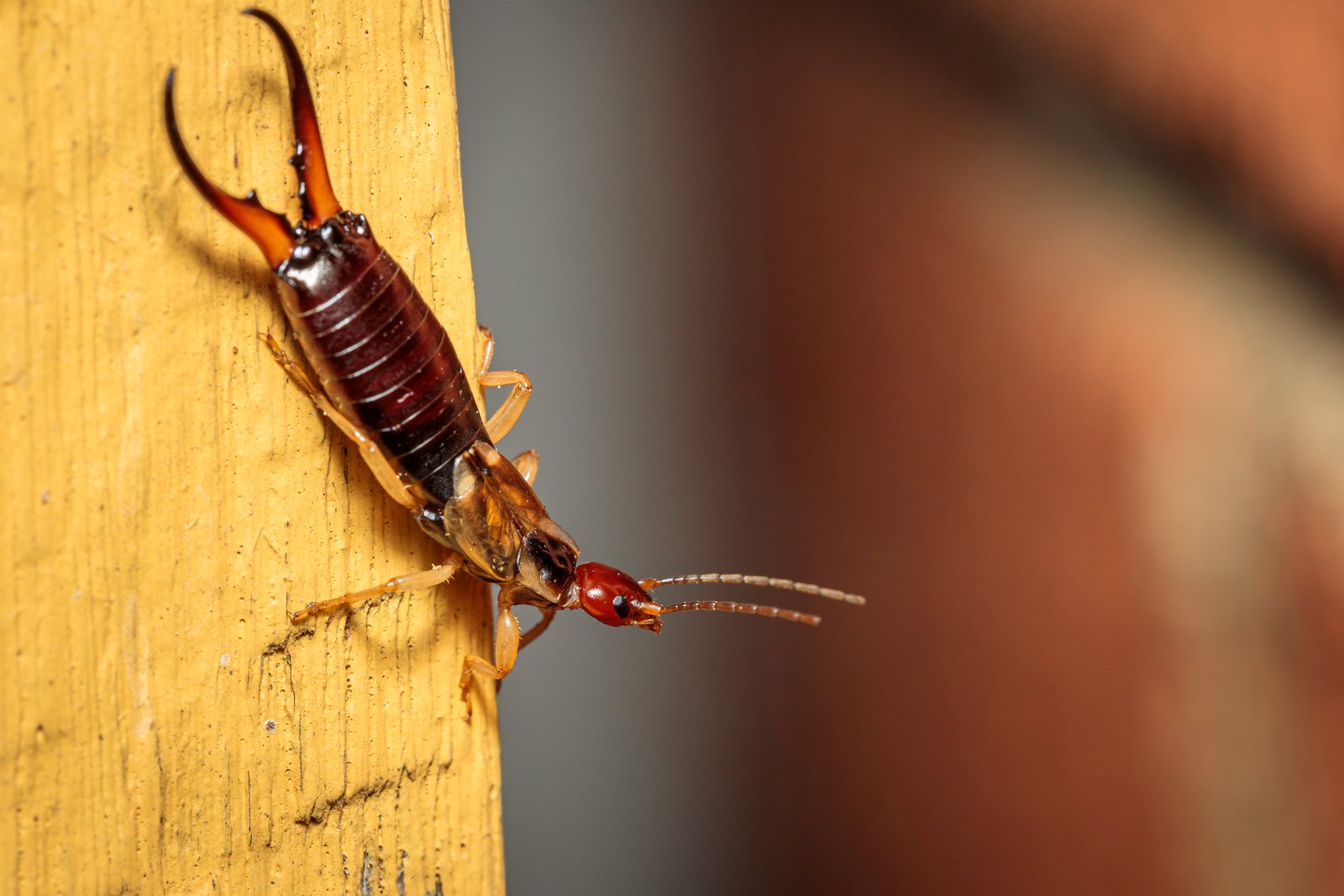
Photographed by Sanctuary Pest Control in Plainfield, IL.
Quick Identification
- Size: About ⅝ inch long
- Color: Dark reddish-brown with lighter brown legs
- Key Features: Distinctive pincer-like appendages (cerci) on rear; flat body; short wing covers (rarely flies)
- Habitat: Moist outdoor areas: under mulch, stones, boards, leaf litter, along foundations. Enters homes during drought or heavy rain.
- Active Season: Spring through fall; most active at night
- Risk Level: None — nuisance only; can pinch if handled but harmless; the “ear” myth is completely false
Pinchers, Myths, and Moisture
The earwig’s reputation is worse than it deserves. The name comes from an old European superstition that earwigs crawl into sleeping people’s ears and bore into the brain — a myth that has been thoroughly debunked but persists in popular culture. The pincers on their rear end look intimidating but are used for mating, capturing small prey, and defense. They can pinch if you handle them, but it’s minor and they’re not aggressive toward humans.
Earwigs are primarily outdoor creatures that prefer moist, dark hiding spots during the day — under mulch, landscape stones, boards, flower pots, and along foundations. They come out at night to feed on a wide variety of organic material including decaying plant matter, small insects, and garden plants. The Illinois Department of Public Health notes that earwigs abandon drought-stricken ground to enter structures in search of moisture, which is why indoor earwig sightings spike during dry spells and during heavy rain when their outdoor habitat becomes saturated.
Control starts with the environment: reduce mulch depth near your foundation (2 inches maximum), create a dry gravel buffer between mulch beds and the foundation wall, eliminate ground-level hiding spots (stacked boards, stones, leaf piles), and reduce exterior lighting that attracts them at night. Foundation perimeter treatments effectively reduce entry. Contact Sanctuary Pest Control at 815-993-3472 for exterior treatment.
Related pests
Sources: Illinois Department of Public Health (dph.illinois.gov) — Occasional Invaders.
Spotted european earwig at your home?
Free inspection — we ID the species, confirm the issue, and give you a fixed quote before any treatment.