
Silverfish Identification & Control
Lepisma saccharina
Silverfish are one of those pests that can live in your home for years before you notice them. They’re nocturnal, fast, and prefer dark undisturbed spaces.
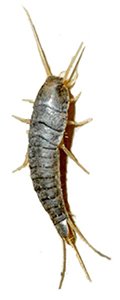
Quick Identification
- Size: About ½ to ¾ inch long (not including tail filaments)
- Color: Silvery-metallic, sometimes grayish-blue
- Key Features: Teardrop-shaped body covered in tiny scales; three long tail filaments (cerci); long antennae; fast, fish-like wriggling movement; no wings
- Habitat: Dark, humid indoor spaces: basements, bathrooms, attics, under sinks, closets, storage areas
- Active Season: Year-round indoors; nocturnal
- Risk Level: Low to moderate — causes real damage to paper, books, wallpaper, clothing, and stored items
The Silent Paper Eater
Silverfish are one of those pests that can live in your home for years before you notice them. They’re nocturnal, fast, and prefer dark undisturbed spaces — exactly the places homeowners rarely check. By the time you spot one darting across the bathroom floor, there may be a well-established population feeding on your books, family photos, wallpaper paste, clothing, and stored documents.
Silverfish feed on carbohydrates and starches — specifically the cellulose in paper, the glue in book bindings, wallpaper adhesive, cotton and linen fabrics, and even the sizing in dry goods packaging. They can survive a year or more without food if moisture is available, which means starving them out isn’t a realistic strategy. A female can lay up to 60 eggs at a time, and populations build steadily in humid environments.
The damage silverfish cause is real. They leave irregular holes and surface grazing on paper, yellowish stains on fabric, and tiny pepper-like droppings. For homeowners with valuable book collections, stored documents, or heirloom clothing, silverfish are a legitimate concern — not just a nuisance.
Moisture control is the foundation of silverfish management: dehumidifiers in basements and crawl spaces, fixing plumbing leaks, improving ventilation in bathrooms and storage areas. Sealing cracks in the foundation and around plumbing penetrations reduces entry points. For established populations, professional treatment targets the dark, undisturbed harborage areas where silverfish breed. Contact Sanctuary Pest Control at 815-993-3472.
Related pests
Sources: Illinois Department of Public Health (dph.illinois.gov) — Clothes Moths and Carpet Beetles (also covers silverfish); University of Illinois Extension.
Spotted silverfish at your home?
Free inspection — we ID the species, confirm the issue, and give you a fixed quote before any treatment.