
Wolf Spider (Family Lycosidae) Identification & Control
Wolf spiders provoke more calls to pest control companies than almost any other spider — not because they’re dangerous, but because they’re large, fast, and.
Quick Identification
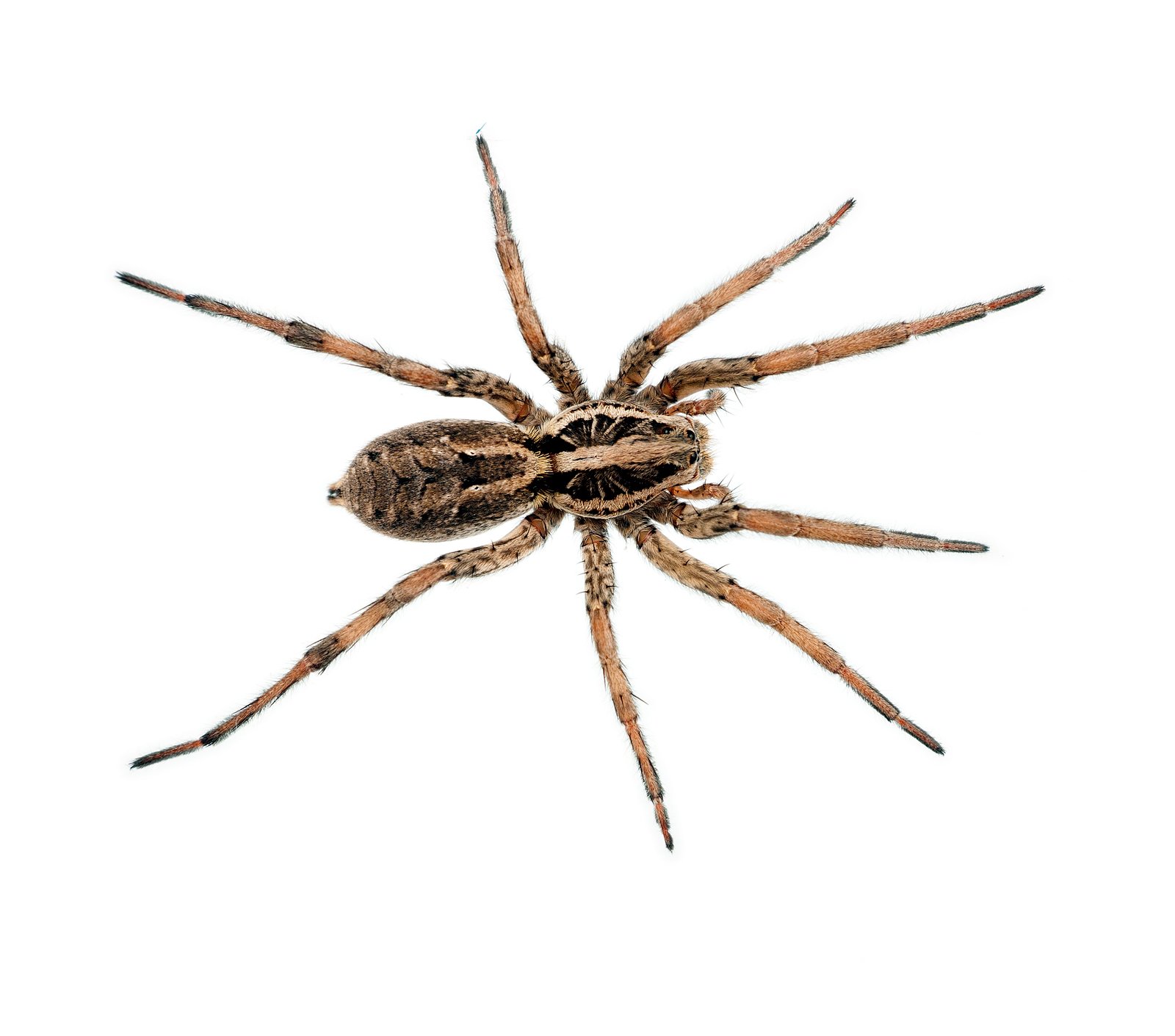
- Size: Body up to 1 inch or more; leg span can reach 2–3 inches — among the largest spiders encountered in Illinois homes
- Color: Brown to gray with darker striping or mottling; lighter stripe down the center of the cephalothorax
- Key Features: Robust, hairy body; eight eyes arranged in three rows (two large eyes on top, two medium-sized below, four smaller below those); fast-moving ground hunter; does NOT build a web
- Distinguishing Trait: Commonly mistaken for brown recluse, but wolf spiders are larger, hairier, have eight eyes (not six), and banded/spined legs
- Active Season: Spring through fall outdoors; enter homes through ground-level openings in fall
- Risk Level: Low — alarming due to size but essentially harmless to humans
Big, Fast, and Misunderstood
Wolf spiders provoke more calls to pest control companies than almost any other spider — not because they’re dangerous, but because they’re large, fast, and startling. Finding a wolf spider the size of a half-dollar sprinting across your basement floor at night is an experience most homeowners don’t easily forget.
Despite their intimidating appearance, wolf spiders are essentially harmless. They can bite if handled or trapped against skin, and the bite is comparable to a bee sting — localized pain and mild swelling that resolves quickly. They don’t build webs. Instead, they’re active ground hunters with excellent eyesight, chasing down insects and other spiders. The Illinois Department of Public Health classifies them alongside other large spiders whose bites are “not considered dangerous.”
Wolf spiders commonly enter homes through ground-level openings — gaps beneath doors, cracks in foundations, and spaces around garage doors — particularly in fall as temperatures drop. They’re attracted to ground-floor rooms, basements, and garages where they can continue hunting prey. A notable behavior: female wolf spiders carry their egg sacs attached to their spinnerets, and after hatching, the spiderlings ride on the mother’s back for several days. If you see a large spider seemingly covered in tiny spiders, that’s what you’re looking at.
In Plainfield and Will County
Wolf spiders are common throughout Plainfield, particularly in homes near wooded lots, landscaped areas, and the DuPage River corridor. They’re frequently found in basements, garages, and ground-level living spaces. While they’re not dangerous, a heavy wolf spider presence often indicates a healthy population of prey insects — which means addressing the underlying insect population will naturally reduce spider encounters. Contact Sanctuary Pest Control at 815-993-3472 if wolf spiders or other large spiders are a recurring concern.
Related pests
Sources: Illinois Department of Public Health (dph.illinois.gov) — Spiders; Illinois State Museum Spider Collection; Illinois Department of Natural Resources.
Spotted wolf spider (family lycosidae) at your home?
Free inspection — we ID the species, confirm the issue, and give you a fixed quote before any treatment.