
Deer Mouse Identification & Control
Peromyscus maniculatus
The deer mouse is the primary carrier of Sin Nombre hantavirus in the United States. Hantavirus Pulmonary Syndrome (HPS) is a severe, sometimes fatal.
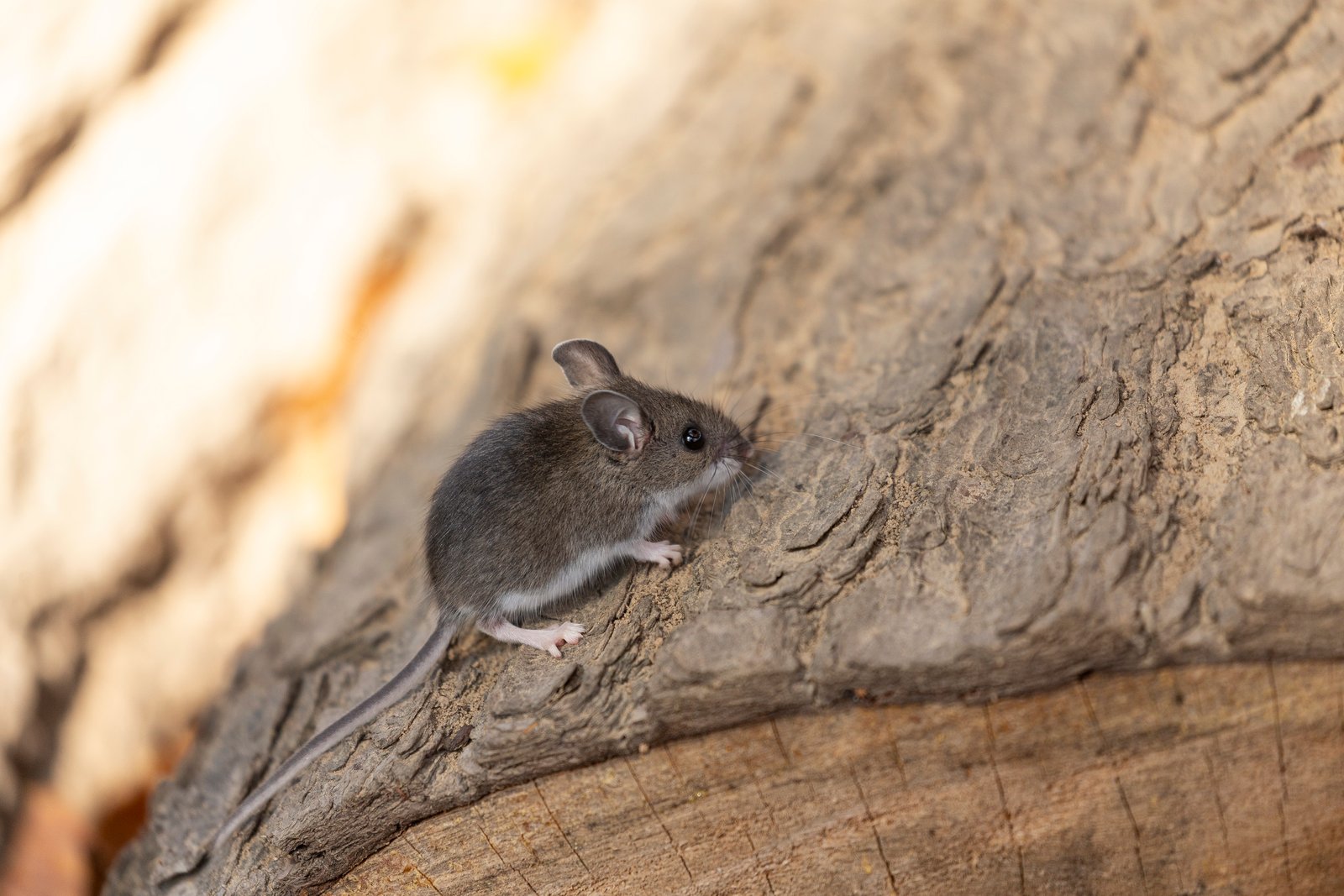
Quick Identification
- Size: 6½ to 7½ inches total (including tail), weighing ½ to 1 ounce
- Color: Grayish-brown to reddish-brown back with sharply defined white belly, white feet
- Key Features: Large black eyes, large nearly hairless ears, bicolored tail (dark on top, white underneath) — about one-third to one-half body length
- Droppings: Similar to house mouse but slightly larger, pointed at both ends
- Distinguishing Trait: Bicolored tail and white belly clearly separate deer mice from house mice, which have uniformly colored tails and gray bellies
- Active Season: Year-round; moves into structures primarily in late fall and winter
- Risk Level: High — primary carrier of hantavirus in North America
Why Deer Mice Demand Serious Attention
The deer mouse is the primary carrier of Sin Nombre hantavirus in the United States. Hantavirus Pulmonary Syndrome (HPS) is a severe, sometimes fatal respiratory disease transmitted to humans when they inhale dust contaminated with deer mouse urine, droppings, or saliva. The case fatality rate for HPS is approximately 40 percent. Illinois has documented hantavirus cases, and the Illinois Department of Public Health considers deer mice a genuine public health concern, particularly in rural and suburban settings where humans encounter rodent waste in enclosed spaces like garages, sheds, cabins, and barns.
Unlike house mice, deer mice are native to North America and prefer outdoor habitats — woodlands, grasslands, and fields. They're less dependent on human structures than house mice, but they readily move into buildings when temperatures drop in fall, particularly into less-frequented areas like detached garages, sheds, attics, and crawl spaces. This is important because homeowners may not discover deer mouse activity until they're cleaning out a space that's been undisturbed for months — exactly the situation that creates hantavirus exposure risk.
Behavior and Habitat
Deer mice are primarily nocturnal and prefer wooded and brushy areas, making them common in suburban properties that border fields, forest preserves, or undeveloped land. In Will and DuPage counties, properties near the DuPage River corridor, Hammel Woods, and other natural areas are particularly susceptible to deer mouse activity.
Deer mice are excellent climbers and often enter structures through upper-level openings that homeowners don't think to check — gaps around rooflines, attic vents, and where tree branches contact the structure. Once inside, they nest in quiet, undisturbed areas using shredded plant material, paper, and fabric. Unlike house mice, deer mice cache food — storing seeds and nuts near their nests — which means you may find small stockpiles of seeds in attic corners or behind stored items.
Telling Deer Mice from House Mice
The distinction matters because the two species carry different diseases and may indicate different entry patterns. The clearest way to tell them apart is the tail: a deer mouse has a sharply bicolored tail — dark on top, white underneath — while a house mouse's tail is uniformly gray-brown. Deer mice also have distinctly white bellies and white feet, whereas house mice have gray bellies. Deer mice tend to have proportionally larger eyes and ears, giving them a more "cute" appearance that leads some homeowners to underestimate them.
If you're unsure which species you're dealing with, that's reason enough to call a professional. The droppings look similar, and identification matters for determining the appropriate health precautions during cleanup.
Safety Precautions
If you discover deer mouse droppings or nesting material in a garage, shed, attic, or crawl space, do not sweep or vacuum them — this can aerosolize the virus. The CDC and Illinois Department of Public Health recommend ventilating the area for at least 30 minutes, then thoroughly wetting the droppings and nesting material with a bleach solution (at least 3 tablespoons of household bleach per gallon of water) before cleaning up with paper towels. Wear rubber gloves and dispose of everything in sealed plastic bags. If the contamination is extensive, professional cleanup is strongly recommended.
In Plainfield and Will County
Deer mice are most commonly encountered in Plainfield neighborhoods that border open fields, wooded lots, or natural areas — particularly along the Heritage Corridor and near the DuPage River. They move into detached garages, sheds, and attic spaces in late fall and may remain undetected through winter. If you find evidence of mouse activity in an outbuilding or seldom-used space, especially with cached seeds and bicolored droppings, treat it as a potential hantavirus risk and contact Sanctuary Pest Control at 815-993-3472 for professional assessment and safe cleanup.
Related pests
Sources: Wildlife Illinois (wildlifeillinois.org) — Rats and Mice; Illinois Department of Public Health (dph.illinois.gov) — Hantaviruses; Centers for Disease Control and Prevention (cdc.gov) — Hantavirus Prevention; University of Illinois Extension.
Spotted deer mouse at your home?
Free inspection — we ID the species, confirm the issue, and give you a fixed quote before any treatment.