Norway Rat Identification & Control
Rattus norvegicus
Norway rats — also called brown rats or sewer rats — are the largest commensal rodents in North America and among the most destructive. They carry diseases.
Quick Identification
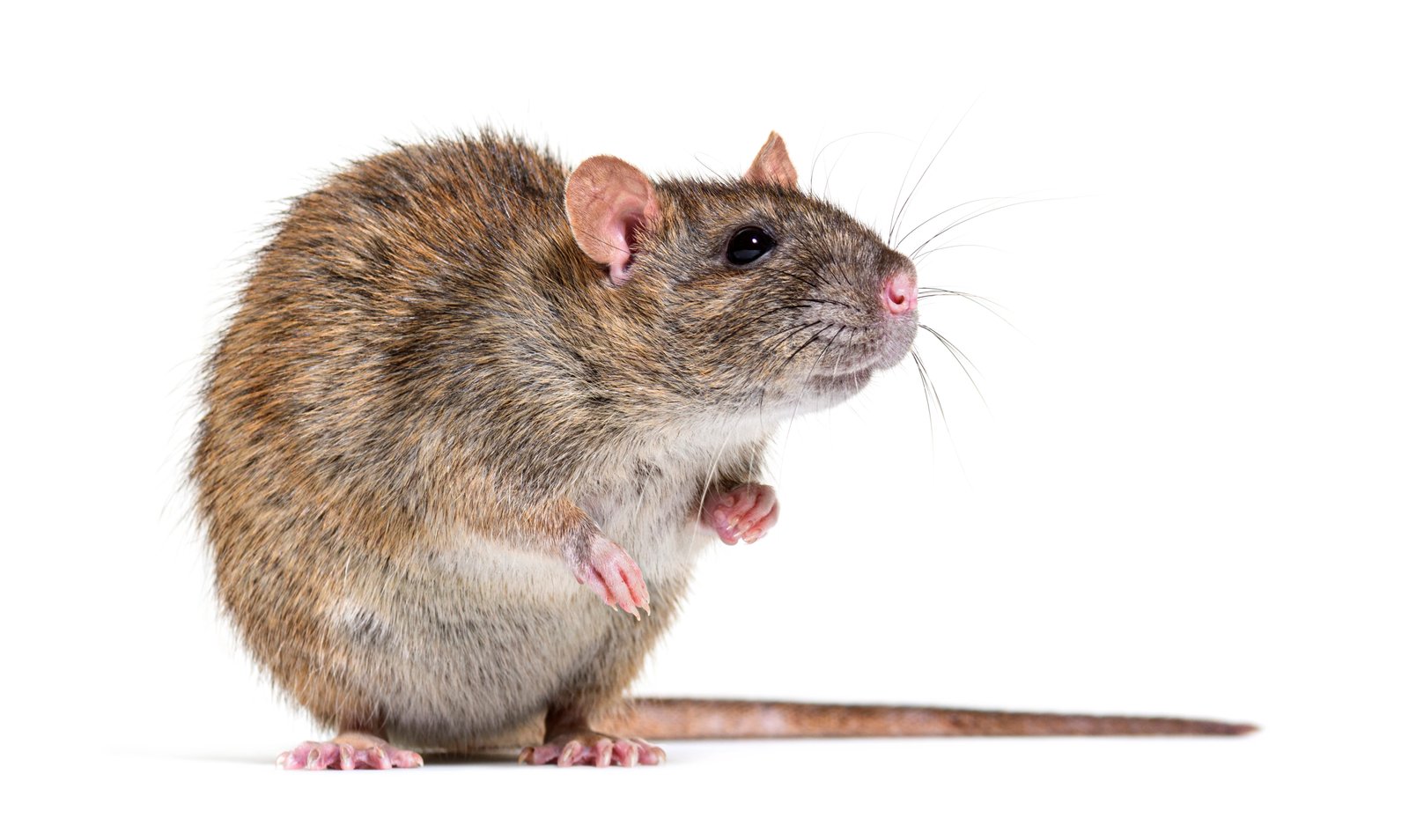
- Size: 13 to 18 inches total (including 6–8½ inch tail), weighing about 11 ounces
- Color: Coarse brown fur with scattered black on upper body, gray to yellowish-white underside
- Key Features: Heavy, stocky body; blunt nose; small ears that don't cover eyes when folded; scaly tail shorter than head and body combined
- Droppings: Capsule-shaped, about ¾ inch long — significantly larger than mouse droppings
- Active Season: Year-round, with increased indoor activity in fall and winter
- Risk Level: High — disease vector, structural damage, food contamination
Why Norway Rats Are Dangerous
Norway rats — also called brown rats or sewer rats — are the largest commensal rodents in North America and among the most destructive. They carry diseases including leptospirosis, salmonellosis, rat-bite fever, and Seoul hantavirus, and they host parasites like fleas, mites, and ticks that transmit additional pathogens. Their droppings, urine, and shed hair contaminate food storage areas and can trigger allergic reactions.
The structural damage from Norway rats is substantial. Their incisors grow continuously, driving constant gnawing behavior. They chew through wood, drywall, concrete block, plastic pipe, aluminum, and electrical wiring. They burrow under foundations, compromising structural integrity, and construct elaborate tunnel systems along building perimeters. The Illinois Extension describes Norway rats as "the greatest mammalian pest of humans, particularly in urban areas."
Behavior and Habitat
Norway rats are ground-level burrowers, unlike roof rats which prefer upper areas. They dig burrows 2 to 3 inches in diameter and up to 6½ feet long alongside foundations, under porches, beneath garbage bins, and in dense landscaping. They're nocturnal and cautious — wary of new objects in their environment, which makes trapping more difficult than with mice. Norway rats are also territorial and will kill mice that compete for the same food sources.
They prefer protein-rich foods including meat, fish, and grain, and require daily access to water — unlike mice which can survive on moisture from their food alone. In suburban settings, unsecured garbage, pet food left outdoors, bird feeders, and compost piles all attract and sustain rat populations.
Signs of Norway Rats
Large, capsule-shaped droppings (about ¾ inch) are the most obvious sign. Fresh gnaw marks on wood, wiring, and plastic, greasy rub marks along walls and baseboards from their oily fur, burrow holes along foundations, and nighttime scratching or scurrying sounds in walls and crawl spaces all indicate rat activity. Rats also produce a strong, unmistakable odor that intensifies as the population grows.
In Plainfield and Will County
Norway rats are less common in suburban Plainfield than house mice, but they do establish in neighborhoods with older housing stock, sewer access, or poor sanitation conditions. Properties with unsealed garbage, woodpiles against the foundation, or heavy ground cover near the home are most at risk. If you suspect rat activity — especially burrow holes along your foundation or large droppings — contact Sanctuary Pest Control at 815-993-3472 for immediate inspection. Rat problems escalate quickly and are best addressed early.
Related pests
Sources: University of Illinois Extension (extension.illinois.edu) — Norway Rat; Illinois Department of Public Health (dph.illinois.gov) — Rats; Internet Center for Wildlife Damage Management (icwdm.org).
Spotted norway rat at your home?
Free inspection — we ID the species, confirm the issue, and give you a fixed quote before any treatment.