Eastern Mole Identification & Control
Scalopus aquaticus
The eastern mole is not a rodent — it's an insectivore more closely related to shrews. Moles spend almost their entire lives underground, tunneling through.
Quick Identification
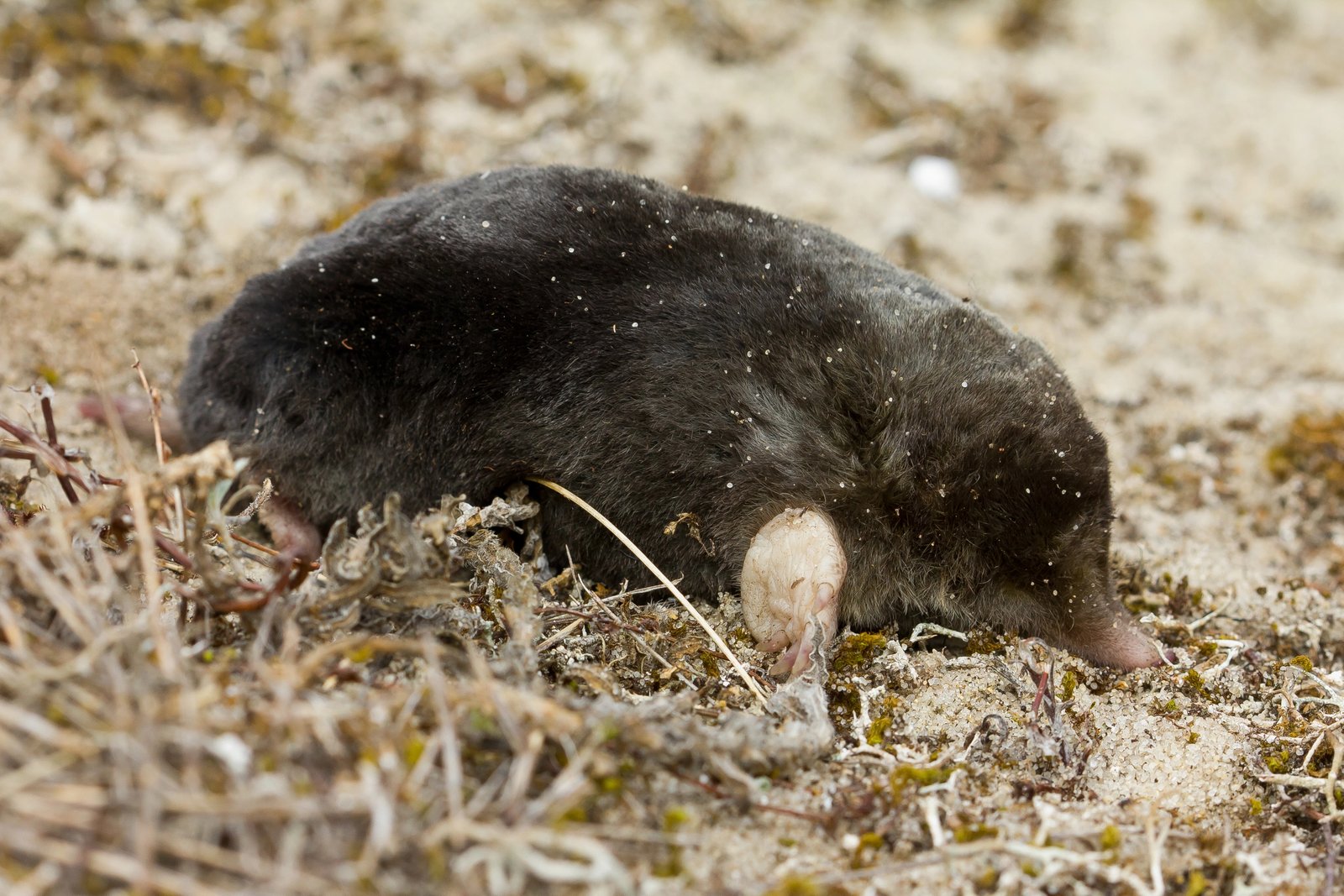
- Size: 4 to 7 inches total, heavy-bodied for its length
- Color: Dark brownish-gray velvety fur that lies flat in any direction
- Key Features: Large paddle-shaped front feet with prominent claws, elongated pointed snout, no visible ears, tiny or hidden eyes
- Active Season: Year-round, most visible in spring when tunneling is closest to the surface
- Risk Level: Low — landscape nuisance only, no structural or health risk
What You Need to Know
The eastern mole is not a rodent — it's an insectivore more closely related to shrews. Moles spend almost their entire lives underground, tunneling through soil to hunt earthworms, grubs, and insect larvae. They do not eat plant roots, bulbs, or grass. The damage they cause is entirely from their tunneling activity: raised ridges across lawns, volcano-shaped soil mounds at tunnel exits, and disrupted root systems where tunnels pass beneath plants.
Moles are solitary animals. What looks like damage from a large population is often caused by a single mole — they can tunnel up to 18 feet per hour and maintain extensive tunnel networks. If you're seeing raised ridges and soil mounds but no surface runways or bark damage, you're dealing with moles, not voles.
Because moles indicate a healthy grub and earthworm population in your soil, their presence is actually a sign of fertile ground. However, the cosmetic damage to lawns can be significant, and their tunneling can undermine newly planted gardens and landscaping beds.
Sanctuary doesn’t treat moles. Mole control is labor-intensive trapping work that’s difficult to price fairly, so we stopped offering it years ago and refer customers to local wildlife-control specialists who handle moles regularly. That said — a lot of suspected mole problems turn out to be voles, which we do treat. Give us a call at 815-993-3472 and we’ll identify what you’re actually dealing with for free. If it’s voles, we’ll handle it. If it’s moles, we’ll point you toward someone who will.
Mole or Vole? How to Tell Them Apart
One of the most common calls we get is from homeowners who found yard damage but aren’t sure what caused it. Here’s how to narrow it down based on what you’re seeing:
- Tunnels and raised ridges across your lawn? Moles. The ridges look like someone pushed a finger under the turf, sometimes with volcano-shaped soil mounds at the tunnel exits.
- Narrow runways pressed into the grass at ground level? Voles. Usually 1–2 inches wide, well-worn paths most visible after snow melts in early spring.
- Bark stripped from young trees or shrubs at ground level? Voles. They girdle trunks and chew roots — a real problem for landscaping investments.
- No bark damage, but tunneling everywhere? Moles. They don’t eat plants; the damage is purely from displacing soil.
- Year-round damage? Likely moles — they’re active all year. Vole damage peaks fall through early spring.
- Spotted a small animal scurrying through the grass? Almost certainly a vole. Moles almost never surface.
If your damage points to voles, we can help — see our vole elimination service or call us at 815-993-3472. If it’s moles, give us a quick call anyway and we’ll point you to a wildlife specialist who handles them.
Sanctuary Pest Control — Plainfield, IL — 815-993-3472 — sanctuarypestcontrol.com
Pest-Free Equals Worry-Free
Related pests
Sources: Wildlife Illinois (wildlifeillinois.org); University of Illinois Extension; Clemson University Home & Garden Information Center — Moles and Voles.
Spotted eastern mole at your home?
Free inspection — we ID the species, confirm the issue, and give you a fixed quote before any treatment.