Yellow Jacket Identification & Control
Vespula spp.
Yellow jackets account for more stinging incidents in Illinois than any other wasp or bee. They’re often mistakenly called bees, but they’re wasps — and much.
Quick Identification
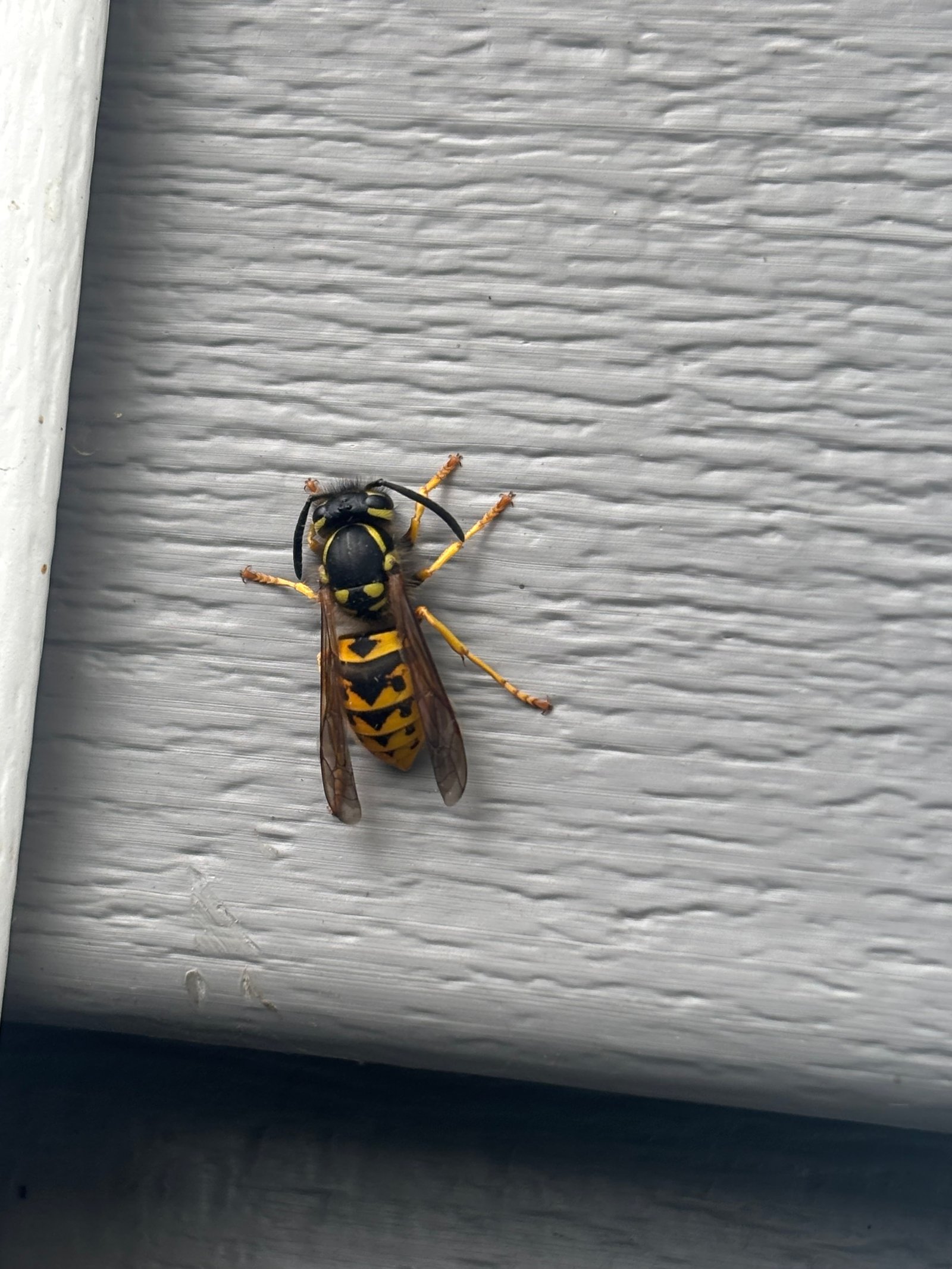
- Size: About ½ inch long
- Color: Bright yellow and black banding; smooth, shiny body
- Key Features: Narrow waist; smooth body without fuzz (unlike bees); fast, darting flight pattern; legs tucked under body during flight
- Nest Type: Eastern yellow jacket: underground in old rodent burrows. German yellow jacket: in wall voids, attics, and crawl spaces. Paper envelope surrounds multiple combs.
- Active Season: Summer through fall; aggression peaks in late August through September
- Risk Level: High — most aggressive stinging insect in Illinois; can sting repeatedly; allergic reactions can be fatal
The Most Dangerous Stinging Insect in Our Area
Yellow jackets account for more stinging incidents in Illinois than any other wasp or bee. They’re often mistakenly called bees, but they’re wasps — and much more aggressive than any bee you’ll encounter. Unlike honeybees, which can sting only once, yellow jackets can sting repeatedly, injecting venom each time. When a yellow jacket stings, it also releases an alarm pheromone that signals other colony members to attack, which is why some people experience multiple stings in rapid succession.
A single yellow jacket colony can contain up to 3,000 workers by late summer. The Illinois Department of Public Health notes that colonies peak just as their insect food supply begins to decline in late summer and early fall, causing them to scavenge more aggressively around food, trash containers, and outdoor gatherings. This is when most stinging incidents occur — and why yellow jacket encounters spike during Labor Day cookouts and fall yard work.
Ground-nesting Eastern yellow jackets are particularly dangerous because their nest entrances are nearly invisible until someone steps on them or runs a lawn mower over them. The resulting swarm can deliver dozens of stings within seconds. About one percent of the population is allergic to wasp venom, and 50 to 100 people die from bee and wasp stings in the United States each year, most from allergic reactions within one hour of the sting.
What to Do
If you notice yellow jackets repeatedly flying to and from the same location — a hole in the ground, a gap in your siding, or a spot under your deck — you’ve found a nest. Do not attempt to treat it yourself. Over-the-counter sprays are often ineffective against established nests, especially ground nests where the colony is deep underground, and disturbing the nest triggers an aggressive defensive response. Sanctuary Pest Control provides wasp nest treatment for yellow jackets, paper wasps, and other species. Call us at 815-993-3472 before the situation escalates.
Related pests
Sources: Illinois Department of Public Health (dph.illinois.gov) — Bees and Wasps; Forest Preserve District of Will County (reconnectwithnature.org); University of Illinois Extension.
Spotted yellow jacket at your home?
Free inspection — we ID the species, confirm the issue, and give you a fixed quote before any treatment.