
Carpenter Ant Identification & Control
Camponotus pennsylvanicus
Carpenter ants are the most destructive ant species in Illinois. Unlike termites, they don’t eat wood — they excavate smooth, clean galleries inside it to.
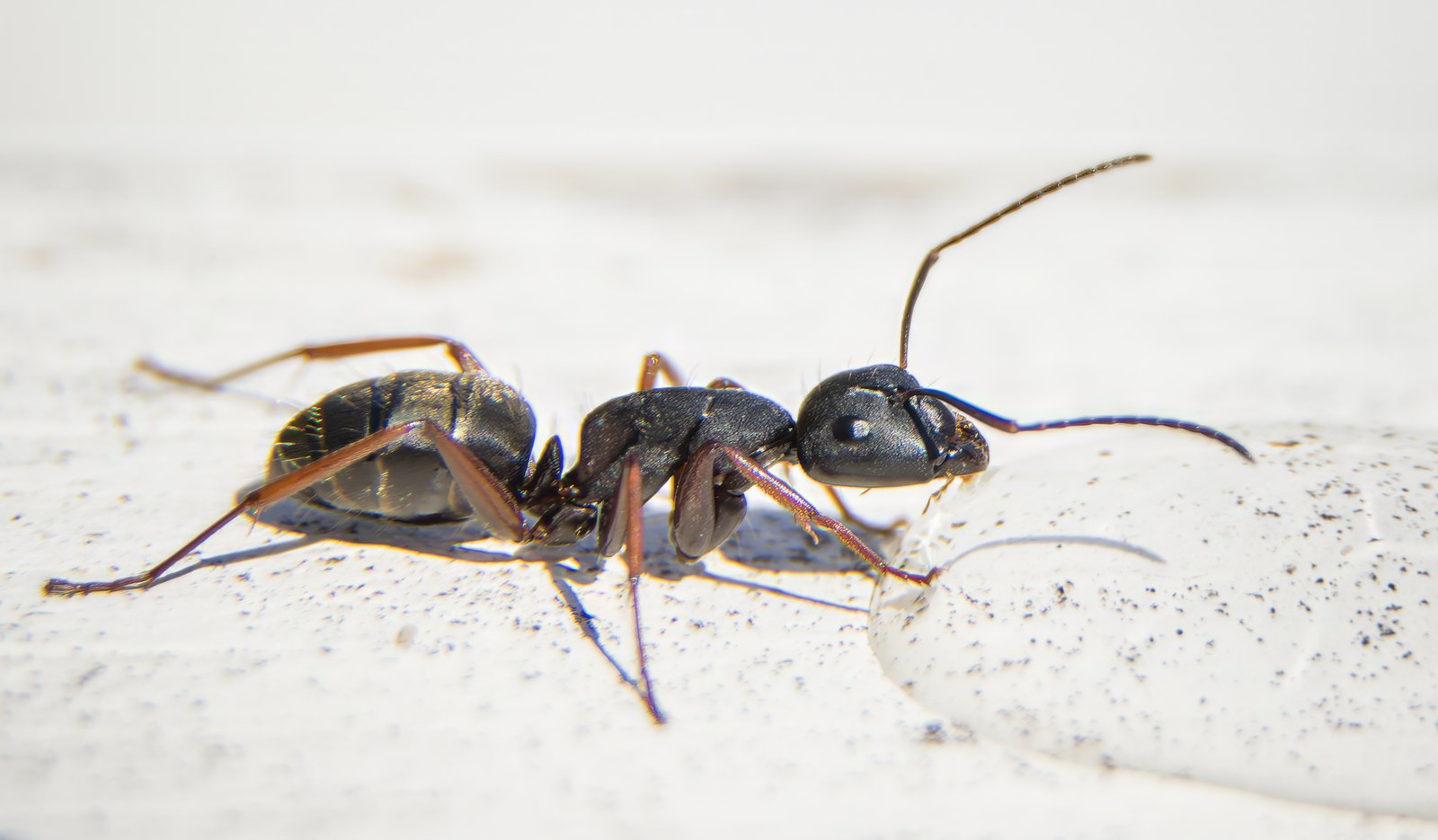
Quick Identification
- Size: ¼ to ½ inch long — the largest pest ant in Illinois
- Color: Dull black (most common species); some species reddish-brown
- Key Features: Smoothly rounded thorax (viewed from side), single node between thorax and abdomen, fast-moving, most active at night
- Distinguishing Trait: Workers emerge about 15 minutes after sundown and follow well-worn chemical trails — sometimes hundreds of feet from the nest
- Active Season: March through October; dormant in winter unless nesting indoors
- Risk Level: High — structural damage from wood excavation
Why Carpenter Ants Are a Serious Structural Concern
Carpenter ants are the most destructive ant species in Illinois. Unlike termites, they don’t eat wood — they excavate smooth, clean galleries inside it to build their nests. Over months and years, this tunneling weakens load-bearing beams, floor joists, deck supports, window headers, and wall framing. Repair costs from untreated infestations routinely run into thousands of dollars.
A mature carpenter ant colony can contain up to 10,000 workers, with the queen capable of living 15 years or more. The colony operates as a network: the parent nest is typically located outdoors in a dead tree, stump, or woodpile, while satellite nests inside your home house workers, pupae, and winged reproductives. This means the ants you see on your kitchen counter are foragers from a much larger operation — killing them does nothing to address the colony.
Carpenter ants are drawn to damp or decaying wood. If they’ve established a nest inside your home, there’s almost certainly a moisture issue — a leaking roof, condensation in walls, poor drainage around the foundation, or a plumbing leak. The Illinois Department of Public Health notes that satellite nests are most commonly found in wood around leaking chimney flashing, attics, bathtubs, windowsills, doorframes, porch supports, and flat roofs. Treating the ants without addressing the moisture source leads to reinfestation.
Signs of Carpenter Ants
Sawdust-like debris (called frass) near wood structures is the most distinctive sign. As carpenter ants excavate their galleries, they push out fine wood shavings mixed with insect body parts. Look for frass piles along baseboards, under window frames, near deck post bases, and around structural beams in basements and crawl spaces.
Large black ants foraging at night are almost certainly carpenter ants. If you see ants a quarter to half inch long trailing along kitchen counters, bathroom sinks, or foundation walls after dark, they’re following a scent trail between their nest and a food or water source. And if you see large winged ants emerging from walls or window frames in spring, a mature colony has been living in your home long enough to produce reproductives — meaning the infestation is well-established and the damage may already be significant.
In Plainfield and Will County
Carpenter ant activity starts as early as April in Plainfield. Homes along the Heritage Corridor, near Settlers’ Park, and in older neighborhoods with mature oaks and wooded lots are prime targets. We see significant carpenter ant pressure in properties with large trees overhanging the roof, damaged deck framing, or any wood-to-soil contact. For our full treatment approach — including parent nest location, satellite nest elimination, and moisture assessment — see our dedicated carpenter ant treatment page. Call Sanctuary Pest Control at 815-993-3472 for a professional inspection.
Related pests
Sources: Illinois Department of Public Health (dph.illinois.gov) — Carpenter Ants; NC State Extension — Biology and Control of Carpenter Ants; Forest Preserve District of Will County (reconnectwithnature.org).
Spotted carpenter ant at your home?
Free inspection — we ID the species, confirm the issue, and give you a fixed quote before any treatment.