Citronella Ant Identification & Control
Lasius interjectus
Citronella ants are one of the most commonly misidentified insects in Will County. When a mature colony produces its winged reproductive swarmers in late.
Quick Identification
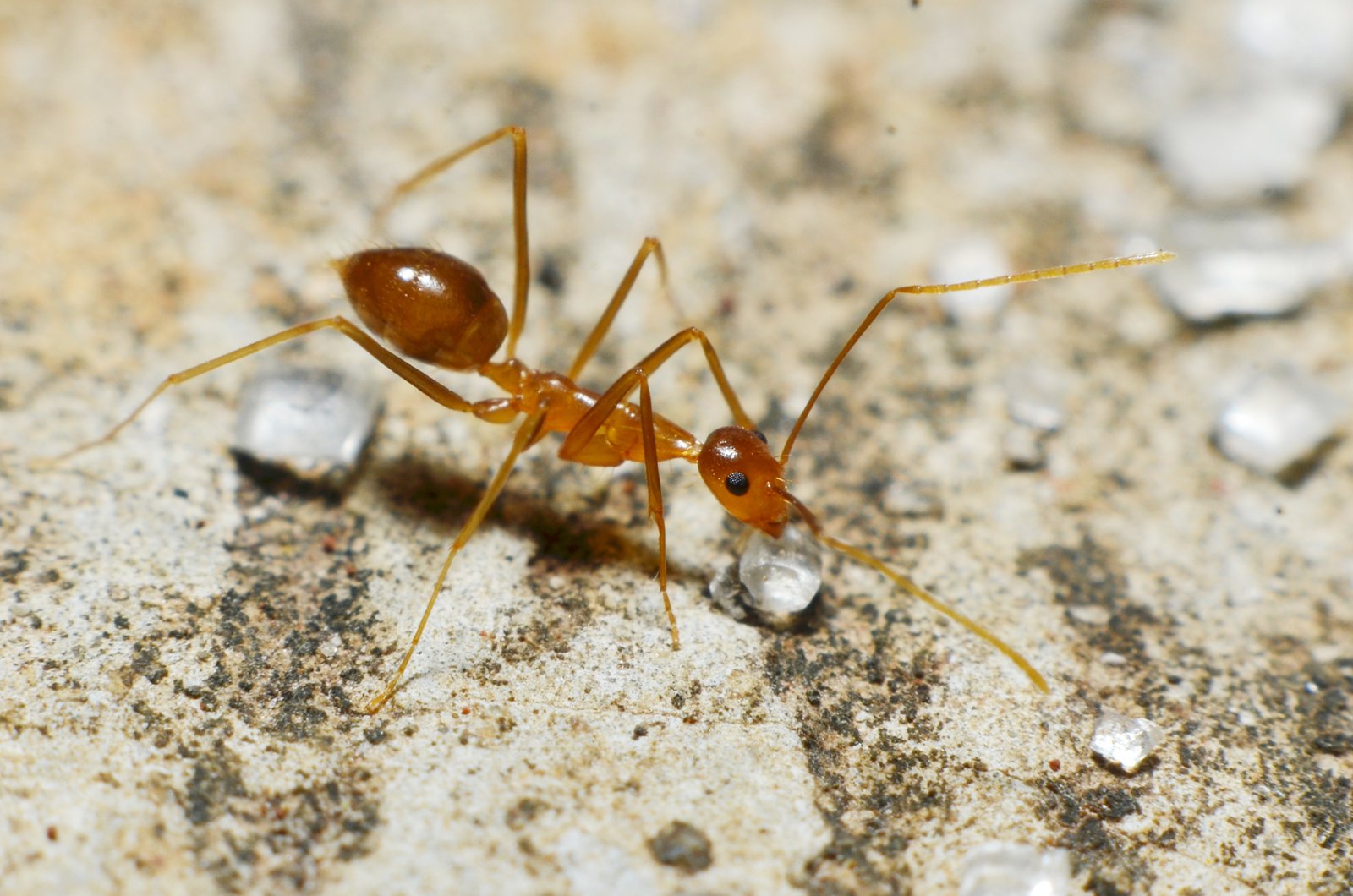
- Size: ¼ to ⅜ inch long — noticeably larger than pavement ants
- Color: Golden yellow to yellowish-brown
- Key Features: Produces a strong lemon or citronella scent when crushed; primarily nocturnal; winged swarmers are frequently mistaken for termites
- Common Names: Larger yellow ant, lemon ant
- Active Season: Swarmers appear in late summer and fall; colonies move indoors in winter
- Risk Level: None — nuisance only; no structural damage, no food contamination
What You Need to Know
Citronella ants are one of the most commonly misidentified insects in Will County. When a mature colony produces its winged reproductive swarmers in late summer, homeowners often panic — the large, yellowish winged ants emerging from cracks in the basement floor or foundation look remarkably similar to termite swarmers at first glance. The distinction is important: citronella ants have a pinched waist and elbowed antennae (typical ant features), while termites have a broad waist and straight, beaded antennae.
The name comes from the strong lemon-citronella odor they release when crushed or disturbed. Citronella ants are subterranean — they nest in soil beneath concrete slabs, foundations, rocks, and logs. They feed exclusively on honeydew produced by underground aphids and mealybugs, which means they don’t forage for human food and won’t respond to conventional ant baits. The Forest Preserve District of Will County confirms they are present locally and notes they’re most commonly seen indoors when colonies move inside during winter or when swarmers emerge in late summer.
Citronella ants don’t damage structures and don’t contaminate food. The primary concern is the alarming appearance of their swarms. If you’re seeing large yellowish winged insects emerging from your foundation and you’re unsure whether they’re ants or termites, contact Sanctuary Pest Control at 815-993-3472 for a professional identification. Getting the right answer quickly can save you significant worry — or catch a real problem early.
Sanctuary Pest Control — Plainfield, IL — 815-993-3472 — sanctuarypestcontrol.com
Pest-Free Equals Worry-Free
Related pests
Sources: Illinois Department of Public Health (dph.illinois.gov) — Ants; Forest Preserve District of Will County (reconnectwithnature.org); University of Illinois Extension.
Spotted citronella ant at your home?
Free inspection — we ID the species, confirm the issue, and give you a fixed quote before any treatment.