Pavement Ant Identification & Control
Tetramorium caespitum
If you’re finding small dark ants trailing across your kitchen counter or bathroom floor, they’re most likely pavement ants. They’re the most frequently.
Quick Identification
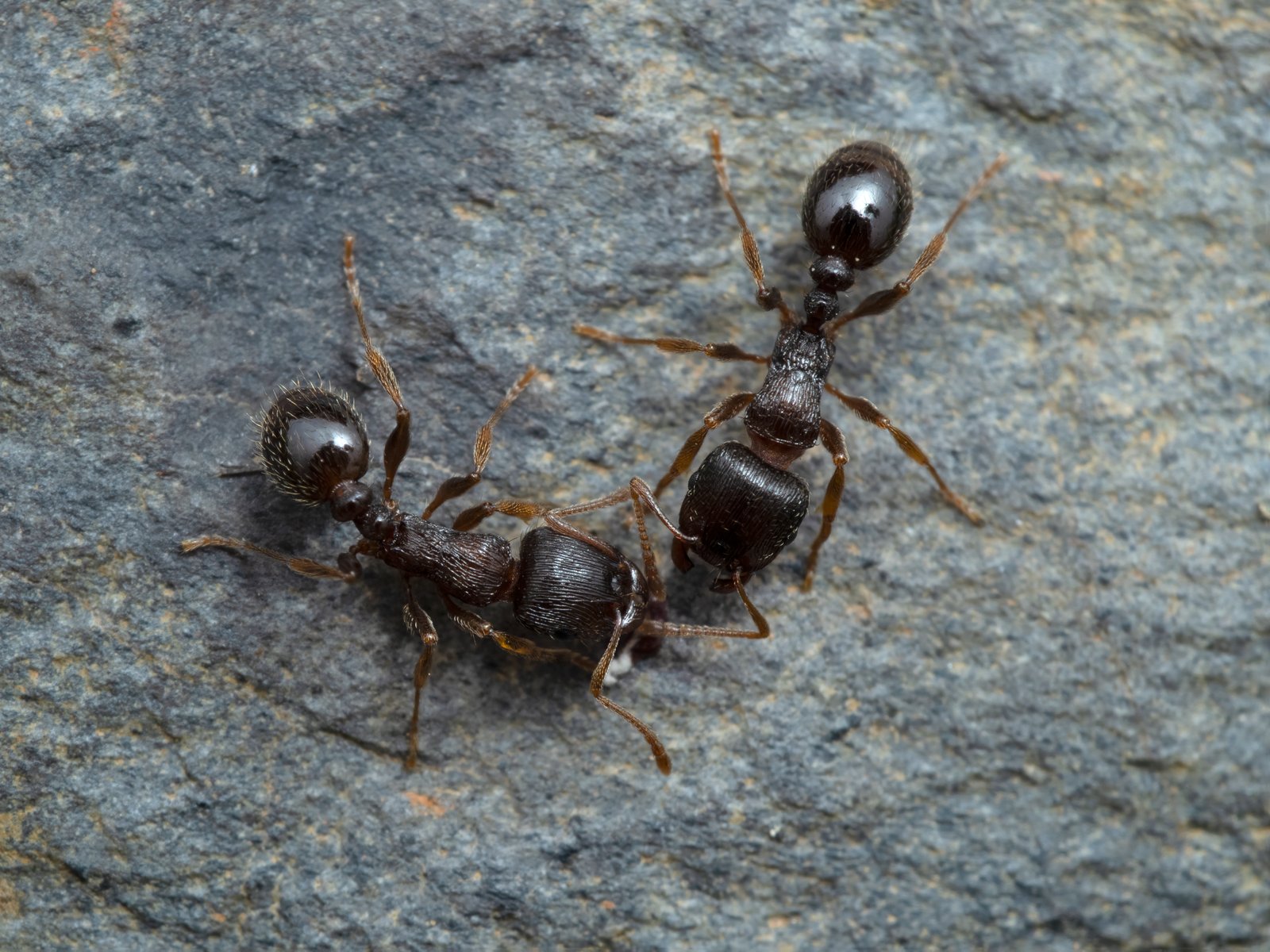
- Size: About ⅛ inch long
- Color: Dark brown to black with lighter-colored legs
- Key Features: Two nodes between thorax and abdomen; parallel grooves (striations) on head and thorax visible under magnification; small conical dirt mounds near nest entrances
- Common Names: Sugar ant (what most homeowners call them)
- Active Season: Spring through fall, with heaviest indoor activity in spring
- Risk Level: Low — nuisance pest, not structurally damaging
The Most Common Ant in Plainfield Homes
If you’re finding small dark ants trailing across your kitchen counter or bathroom floor, they’re most likely pavement ants. They’re the most frequently encountered ant species in Illinois structures and the number one ant complaint we hear from homeowners across Will and DuPage counties.
Pavement ants get their name from their nesting habit: they excavate soil beneath sidewalks, driveways, patios, garage slabs, and building foundations, pushing displaced dirt into small conical mounds through cracks in the pavement. Their colonies can contain several thousand workers and are surprisingly deep underground, which is why surface sprays rarely reach them.
These ants aren’t picky eaters. They forage for greasy foods, sweets, seeds, and dead insects, and they’ll follow pheromone trails from their outdoor nest into your home through foundation cracks, expansion joints, and gaps around utility penetrations. Once a scout finds a reliable food source in your kitchen, the trail becomes a highway — and the steady line of ants you see marching along your baseboard is a parade of workers carrying food back to the colony.
Why DIY Sprays Don’t Work on Pavement Ants
The store-bought sprays homeowners reach for are repellent products — ants can sense them, avoid the treated area, and reroute to a different entry point. The ants vanish from one spot and appear in another a few days later, leading homeowners to think the problem is getting worse despite treatment. Hitting the foragers you see kills a few workers but does nothing to the queen or the thousands of workers underground.
Professional pavement ant treatment uses two tools depending on what the colony needs. The main one is a non-repellent spray. Ants can’t sense it once it’s dry, so they walk right across it, pick up the active ingredient on their bodies, and carry it back to the nest — where it transfers from ant to ant during grooming and communication. The colony spreads the pesticide through itself, queen included. We use this approach most of the time and it produces the most reliable results. We also use bait formulations when they’re the right fit — baits work well when the ants take to them, but acceptance is roughly 50/50; if the colony isn’t interested, the bait does nothing. Knowing when to use each tool is the difference between a one-week fix and a colony that’s actually eliminated.
In Plainfield and Will County
Pavement ants are a persistent problem throughout Clublands, Grande Park, Winding Creek, and the newer subdivisions south of Route 126. They’re especially active in spring when warming soil temperatures activate the colony. Kitchens and bathrooms are the most common invasion points, and homes with slab-on-grade construction are particularly susceptible because the ants nest directly beneath the foundation. If pavement ants are making themselves at home in yours, contact Sanctuary Pest Control at 815-993-3472.
Related pests
Sources: Illinois Department of Public Health (dph.illinois.gov) — Ants; University of Illinois Extension (extension.illinois.edu) — Ants in the Kitchen; Forest Preserve District of Will County.
Spotted pavement ant at your home?
Free inspection — we ID the species, confirm the issue, and give you a fixed quote before any treatment.